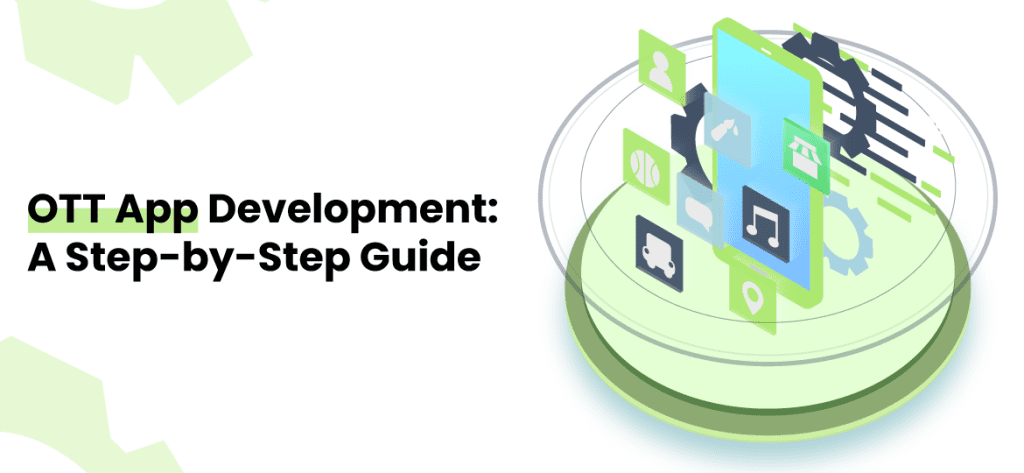
If you are planning an OTT app — an over-the-top video or audio streaming platform delivered straight to viewers over the internet — the first question is cost. Here is the short answer. In 2026, OTT app development spans a wide range depending on ambition. A lean single-platform MVP with a content library and subscriptions sits at the entry level; a multi-device platform with live streaming, DRM, and personalized recommendations is a substantially larger investment. The reason for the spread is that an OTT product is a system: apps across phones, TVs, and web, plus a streaming backend, a content management system, a monetization layer, and content protection.
OTT is one of the fastest-growing software categories as viewers keep shifting from traditional TV to on-demand streaming, which means both opportunity and real competition. The platforms that succeed get three things right: fast, reliable playback; a monetization model that fits their audience; and content that keeps people coming back. This guide covers how OTT apps work, the features and devices that matter, honest 2026 cost ranges, the tech stack, timelines, and how we build streaming platforms at EchoInnovate IT. If you already know what you want to build, see our OTT app development services.
Key takeaways
- An OTT app in 2026 spans a wide investment range, because it covers multiple devices plus a streaming backend and CMS.
- A single-platform MVP with a content library and subscriptions is the entry-level option.
- The core of the product is reliable playback, monetization, and content management — not the number of screens.
- Your monetization model (SVOD, AVOD, TVOD, or hybrid) shapes both features and cost.
- Ongoing costs — streaming, storage, CDN, and content — matter as much as the build; plan for them from day one.
How much does OTT app development cost in 2026?
OTT cost scales with how many devices you support, how you monetize, and whether you stream on-demand only or add live. The table below shows realistic 2026 market ranges by ambition level. Remember that OTT also carries meaningful ongoing costs — streaming, storage, CDN bandwidth, and content — which the build price does not include.
| Tier | What you get | Investment level | Timeline |
|---|---|---|---|
| MVP | One platform (mobile or web), VOD library, one monetization model, basic CMS and player | Entry-level | 3–5 months |
| Growth | Mobile + web + one TV platform, profiles, recommendations, DRM, offline downloads, richer CMS | Mid-range | 5–9 months |
| Scale | All devices, live streaming, multi-DRM, personalization, multi-language, high-traffic infra and analytics | Enterprise-scale | 9–14 months |
Use these as planning anchors, not quotes. The number of device platforms and whether you add live streaming and DRM are the biggest single drivers. We do not publish fixed per-project prices because two OTT apps with the same catalog differ once devices, DRM, and live enter the picture; we give a transparent quote after a short scoping call. Our mobile app development cost guide covers the broader line items.
How an OTT platform works
An OTT platform delivers video or audio over the open internet to any device, bypassing cable or satellite. Behind a simple play button sits a pipeline that is worth understanding because it explains where the cost goes.
Ingest and processing. Content is uploaded, then transcoded into multiple resolutions and bitrates so it can adapt to each viewer’s connection. This adaptive bitrate streaming is what keeps playback smooth on both fast Wi-Fi and weak mobile signal.
Storage and delivery. Processed content lives in cloud storage and is served through a content delivery network (CDN) that caches it close to viewers, so playback starts fast and buffers rarely. CDN bandwidth is one of the largest ongoing costs of running an OTT service.
The player and apps. Client apps on phones, tablets, web browsers, and connected TVs request the right stream, handle playback controls, and manage things like resume, subtitles, and quality selection.
Content protection (DRM). Premium content is encrypted with digital rights management — Widevine, FairPlay, and PlayReady across platforms — so it cannot be copied. DRM is often required by content owners and adds engineering effort.
Backend, CMS, and monetization. A content management system lets your team publish and organize the catalog, while the monetization layer handles subscriptions, ads, or rentals. Analytics tie it together so you can see what viewers watch and where they drop off.
The takeaway: the apps viewers touch are only part of the product. Much of the engineering, and most of the ongoing spend, sits in the streaming, delivery, and protection layers behind them.
If your streaming product leans toward games, music, or live events, our guide to entertainment app development covers those adjacent categories in detail.
OTT monetization models (SVOD, AVOD, TVOD)
Your monetization model is a product decision, not just a business one, because it shapes which features you build. The main options:
- SVOD (subscription). Viewers pay a recurring fee for unlimited access, like most premium streaming services. Requires subscription management, billing, plan tiers, and churn handling.
- AVOD (ad-supported). Content is free and revenue comes from ads. Requires ad-server integration (such as Google Ad Manager), ad insertion into the stream, and reporting. Lower barrier for viewers, but you need scale to earn.
- TVOD (transactional). Viewers pay per title to rent or buy. Requires per-item purchase flows and rental windows.
- Hybrid. Many 2026 platforms combine models — a free ad-supported tier plus a paid subscription, or subscription plus premium rentals. Hybrid maximizes reach and revenue but adds the most product complexity.
Pick the model before you build, because retrofitting monetization later is expensive. For an MVP, we usually recommend starting with a single model that matches your content and audience, then adding a second tier once you have viewers. A short scoping call is the fastest way to decide which model fits and what it means for your budget.
Must-have features of an OTT app
For a first version, build the essentials that make streaming pleasant and monetization work, and defer the rest.
Viewer app essentials:
- Sign-up, login, and (ideally) multiple profiles per account
- Content catalog with categories, search, and filtering
- A reliable adaptive-bitrate video player with quality selection
- Resume playback, watchlist, and continue watching
- Subtitles and multiple audio tracks
- Your chosen monetization: subscription, ads, or rentals
- Push notifications for new releases
Backend and CMS essentials:
- Content upload, transcoding, and catalog management
- User and subscription management
- DRM and content protection for premium titles
- CDN configuration for fast delivery
- Analytics on views, watch time, and drop-off
Advanced features — AI-driven personalized recommendations, live streaming, downloads for offline viewing, social and watch-party features, and support for every TV platform — define the growth and scale tiers. Recommendations in particular drive retention, but they are worth adding once you have enough viewing data to make them useful. Building every advanced feature before launch is the most common way OTT budgets spiral, so we push clients to nail reliable playback and one monetization model first.
Tech stack and integrations
The OTT stack is built around reliable streaming across many devices.
Client apps. Mobile apps in Flutter or React Native (or native when you need the most control over the player), a web app in React or Next.js, and TV apps for platforms like Android TV, Apple tvOS, Roku, and Fire TV. TV apps are their own effort, which is why device coverage moves cost so much.
Video pipeline. Transcoding and packaging (AWS Elemental, FFmpeg, or a managed video platform such as Mux or api.video), adaptive streaming via HLS and DASH, and a player SDK that supports your DRM.
DRM. Widevine (Android, Chrome), FairPlay (Apple), and PlayReady (Windows, some TVs), usually via a multi-DRM provider so one integration covers all platforms.
Delivery. A CDN such as CloudFront, Akamai, or Cloudflare to serve streams close to viewers.
Backend and CMS. A scalable API (Node.js, Python, or Go), a database for catalog and users, and a content management system your team uses to publish content.
Monetization integrations. Payment and subscription tooling (Stripe, in-app purchases) for SVOD and TVOD, or an ad server (Google Ad Manager) for AVOD.
Because the streaming and DRM layers are specialized, the team you choose matters. If you need to grow engineering as you add devices, our IT staff augmentation services add vetted engineers, and our software development company can own the full platform end to end.
How long it takes and what drives cost
As rough 2026 planning numbers for a dedicated team, a single-platform OTT MVP takes 3 to 5 months, a growth platform across mobile, web, and one TV platform takes 5 to 9 months, and a full multi-device platform with live streaming and multi-DRM takes 9 to 14 months. Five factors decide where you land in the cost ranges above:
1. Number of device platforms. Each platform — iOS, Android, web, and each TV OS — is a separate app with its own player and testing. Device coverage is the biggest driver.
2. Live vs on-demand. Live streaming adds real-time encoding, low-latency delivery, and failover, which is materially more complex than on-demand VOD.
3. DRM and content protection. Multi-DRM support is often mandatory for licensed content and adds engineering across every platform.
4. Personalization and recommendations. An AI recommendation engine boosts retention but adds data engineering and ongoing tuning.
5. Team model and location. Blended rates vary widely by geography, and a dedicated offshore or nearshore team often delivers comparable quality below onshore rates. Our offshore rates by country guide shows the effect.
Do not forget the ongoing costs: CDN bandwidth, cloud storage and transcoding, DRM licensing, and content itself. For many OTT services these running costs eventually exceed the build cost, so plan the business model around them from day one. Because all of this interacts, we quote after a short scoping call rather than publishing a fixed price.
How EchoInnovate IT builds OTT apps
EchoInnovate IT is an India-based custom and white-label software development company with 12 years of experience and a team of 50+ people. We have shipped 500+ products — most under our clients’ own brands — and hold a 5.0 rating across 6 verified reviews on Clutch. That work includes streaming and media products where reliable playback and monetization decide whether viewers stay.
For OTT, we start with the model, not the screens. We help you choose the monetization approach, the device platforms that match your audience, and whether you need live streaming and DRM at launch. We scope an MVP that nails reliable adaptive playback and one monetization model, build the viewer apps cross-platform where it makes sense to control cost, wire up transcoding, CDN, and DRM properly, and give your team a CMS they can actually run. We staff a dedicated team, plan the cloud architecture with your ongoing streaming costs in mind, and support the platform after launch as you add devices and features.
You are hiring a team that has shipped media and streaming products before, not a template. Most clients start with our mobile app development team through the two-week pilot sprint below, which locks scope and de-risks the streaming architecture before the full build begins.