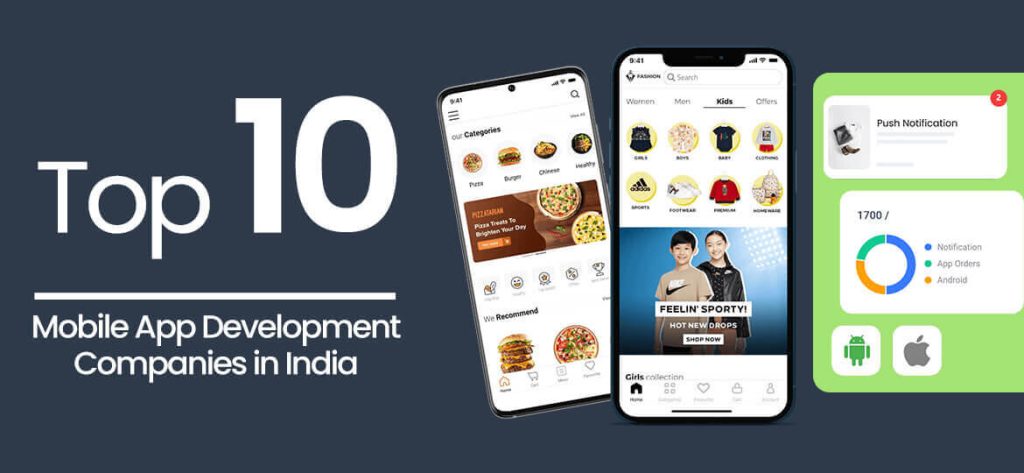
If you are a business in the US, UK, or UAE evaluating mobile app development companies in India, you are looking at one of the largest and most mature software talent markets in the world. India ships a significant share of the world’s outsourced engineering, and for good reason: deep talent pools, favorable rates, and English-fluent teams that have delivered for global brands for two decades. But the same scale that makes India attractive also makes selection hard. Thousands of firms call themselves a mobile app development company India buyers should trust, and quality varies widely from solo freelancers reselling offshore labor to established studios with real delivery track records. This guide is written for the person doing the evaluation. It explains why India remains a strong choice for app development in 2026, what to look for when you shortlist vendors, realistic market cost ranges, how to vet and de-risk a partner before you sign, the engagement models available when you hire mobile app developers in India, and how a firm like EchoInnovate IT delivers as a top app development company India teams can rely on. By the end you will have a repeatable checklist you can apply to any vendor, plus the questions that separate a dependable partner from an expensive lesson.
In this article
- Why India Is a Strong Choice for Mobile App Development in 2026
- What to Look for in Mobile App Development Companies in India
- Cost Ranges When You Hire Mobile App Developers in India
- How to Vet and De-Risk a Mobile App Development Company India Buyers Can Trust
- Engagement Models: The Right Way to Hire Mobile App Developers in India
- Technology Choices: Native, React Native, or Flutter
- How EchoInnovate IT Delivers as a Top App Development Company India Teams Rely On
- Red Flags and Common Mistakes to Avoid
- Frequently Asked Questions
Why India Is a Strong Choice for Mobile App Development in 2026
India remains a default shortlist entry for mobile app development companies in India searches for three durable reasons: cost, talent depth, and timezone coverage. On cost, blended rates for skilled iOS, Android, React Native, and Flutter engineers run materially lower than US or Western European equivalents without a proportional drop in quality, which is why funded startups and enterprise teams alike route delivery through the country. On talent, India graduates a large volume of engineers every year and has a mature ecosystem of studios that have shipped for banking, healthcare, retail, and logistics clients globally, so the depth of specialists in areas like payments, offline-first sync, and app store compliance is genuine rather than aspirational. On timezone, IST overlaps with EMEA business hours in the morning and can flex to catch US mornings, giving you a working handoff model where issues raised at end of your day are often resolved by the time you log in. There are trade-offs to plan for: communication cadence matters, and the gap between a strong firm and a weak one is wide, so vetting is not optional. English fluency across senior engineers and project managers is common, but you should still confirm it on your specific team. For a deeper cost picture across countries, see our guide on offshore software development rates by country at https://www.echoinnovateit.com/blogs/offshore-software-development-rates-by-country, which puts India’s rates in context against Eastern Europe and Latin America. The short version: India offers strong value, but value is only realized when you pick the right partner, which is what the rest of this guide is about.
What to Look for in Mobile App Development Companies in India
When you shortlist a mobile app development company India buyers can trust, evaluate against a consistent set of criteria rather than a slick portfolio alone. Start with delivery evidence: ask for apps currently live in the App Store and Google Play, with public links, ratings, and the firm’s specific role on each. Many agencies show design mockups that never shipped, so live proof matters more than case study PDFs. Next, examine team composition. You want dedicated engineers assigned to your project, not a rotating pool billed by the hour, and you want a named technical lead who owns architecture decisions. Ask how they handle code ownership, source control, and CI/CD, because a partner who cannot show you a clean repository and an automated build pipeline is a partner who will slow you down later. Review their process for discovery, sprint planning, QA, and release management; a firm without a documented QA stage tends to ship regressions. Verify third-party proof: independent review platforms like Clutch, verified client references you can actually call, and public ratings carry more weight than testimonials on the vendor’s own site. Finally, assess communication: who is your day-to-day contact, what is the escalation path, and what overlap hours will they commit to in writing. The matrix below summarizes the criteria and what a strong answer looks like. Use it as a scorecard across every vendor so you compare like for like. If you are building a broader product and not just an app, our software development company page at https://www.echoinnovateit.com/software-development-company covers how the same criteria apply to full-stack engagements.
One caution on rankings: many 2026 lists of the “top mobile app development company in India” are vendor press releases or sponsored placements, not audited comparisons, so a position on a list tells you little. The reliable signal is a live Clutch or GoodFirms profile with verified client reviews that you can read and cross-check yourself.
| Criterion | Weak Signal | Strong Signal |
|---|---|---|
| Live app proof | Design mockups only, no store links | Multiple live apps with public ratings and named role |
| Team model | Rotating pool, hourly-only billing | Dedicated engineers with a named technical lead |
| Engineering rigor | No CI/CD, unclear code ownership | Clean repo, automated builds, you own the code |
| Independent proof | Testimonials on own site only | Verified reviews and callable references |
| Communication | No named contact, vague overlap hours | Named PM, written overlap commitment, clear escalation |
Cost Ranges When You Hire Mobile App Developers in India
Cost is usually the reason buyers look at mobile app development companies in India in the first place, so it helps to anchor on market ranges rather than a single number. Rates vary by seniority, technology, and city, but as a general market guide in 2026, mid-level Indian mobile engineers bill in a range well below US onshore rates while senior specialists command a premium that is still competitive globally. Total project cost depends far more on scope than on hourly rate: a focused single-platform app with a handful of screens sits at the lower end, a cross-platform app with authentication, payments, and a backend sits in the middle, and a complex multi-role platform with real-time features, integrations, and compliance requirements sits at the top. Beware quotes that look too cheap, because they usually exclude QA, project management, deployment, or post-launch support, and those costs reappear later. When you compare vendors, insist on a fixed scope and a written breakdown so you are comparing total delivered cost, not a headline rate. For a detailed breakdown of what drives app pricing, our mobile app development cost guide at https://www.echoinnovateit.com/blogs/mobile-app-development-cost walks through the line items feature by feature, and our hire offshore developers guide at https://www.echoinnovateit.com/blogs/hire-offshore-developers covers how rate structures work across engagement types. To be direct about our own pricing: we publish market ranges here for planning, but EchoInnovate IT gives a transparent quote only after a short scoping call, because a real number requires understanding your actual feature list, integrations, and timeline. That approach protects you from the padded estimates and mid-project change orders that make cheap quotes expensive.
How to Vet and De-Risk a Mobile App Development Company India Buyers Can Trust
Vetting is where most costly mistakes are avoided, and it is the step buyers most often rush. Treat it as a structured process. First, run a technical reference check: ask for two or three clients whose apps are live, then actually call them and ask specific questions about missed deadlines, change-order behavior, and how the firm handled the hardest bug in the project. Vendors who cannot produce callable references are a red flag. Second, request a small paid trial before committing to a full build. A short, fixed-scope pilot tells you more about a team than any sales call, because you see their code quality, communication cadence, and estimate accuracy under real conditions. Third, confirm intellectual property and code ownership in writing: you should own all source code, design files, and credentials from day one, with access to the repository throughout, not handed over only at the end. Fourth, review security and compliance posture if you handle regulated data, including how they manage secrets, data residency, and access controls. Fifth, define the exit path up front, so if the relationship does not work you can transition the codebase to another team without friction. De-risking also means structuring the contract around milestones and acceptance criteria rather than a lump sum paid on faith. A dependable mobile app development company India teams rely on will welcome these steps, because rigorous buyers make for smoother projects. If you are considering a longer-term dedicated team, our offshore development center page at https://www.echoinnovateit.com/offshore-development-center-odc explains how a managed ODC model builds in many of these safeguards, including code ownership and a named delivery lead, so risk is handled by structure rather than trust alone.
Engagement Models: The Right Way to Hire Mobile App Developers in India
There is no single correct way to hire mobile app developers in India; the right model depends on how well-defined your scope is and how much ongoing work you expect. The three common structures are fixed-price projects, dedicated team or staff augmentation, and a managed offshore development center. Fixed-price works best when your requirements are stable and documented, because both sides agree on scope, timeline, and cost up front, which caps your financial risk but requires disciplined change management if requirements shift. Dedicated team, sometimes called staff augmentation, gives you engineers who work as an extension of your team on a monthly basis, which suits evolving products where priorities change sprint to sprint and you want direct control over the backlog. A managed offshore development center is the most structured option for sustained work: you get a dedicated team, a delivery lead, and the vendor handles hiring, retention, and infrastructure, which reduces your management overhead while keeping costs predictable. Many buyers start with a fixed-price pilot to validate the partner, then graduate to a dedicated team or ODC once trust is established, which is a sensible way to de-risk a larger commitment. If your goal is to validate a product idea quickly rather than build the full thing, a lean MVP is often the smartest first engagement; our MVP for startups page at https://www.echoinnovateit.com/mvp-for-startups covers how to scope a first release that proves demand before you invest in the full build. Whatever model you choose, put the overlap hours, reporting cadence, and acceptance criteria in the contract so expectations are explicit from the start rather than negotiated mid-project.
Technology Choices: Native, React Native, or Flutter
Before you commit to any of the mobile app development companies in India on your shortlist, get clear on the technology approach, because it affects cost, timeline, and long-term maintainability. The core decision is between native development and cross-platform frameworks. Native builds, using Swift for iOS and Kotlin for Android, give you the deepest platform integration and performance ceiling, which matters for graphics-heavy apps, complex device features, or apps where every millisecond counts. The trade-off is that you maintain two codebases, which roughly doubles engineering effort. Cross-platform frameworks like React Native and Flutter let one team ship to both platforms from a shared codebase, which lowers cost and speeds up delivery for the large majority of business apps that do not need bleeding-edge native performance. React Native is a strong fit when you already have web React talent or want a large ecosystem of libraries, while Flutter offers a highly consistent UI across platforms and strong performance from a single codebase. A capable partner will recommend the approach that fits your product rather than defaulting to whatever they happen to staff, and will explain the maintenance implications honestly. Our React Native app development page at https://www.echoinnovateit.com/react-native-app-development covers when that framework is the right call, and our comparison guide at https://www.echoinnovateit.com/blogs/react-native-vs-flutter breaks down the trade-offs feature by feature so you can go into the vendor conversation informed. The point is not that one technology is universally correct; it is that you should understand the choice well enough to challenge a vendor who cannot justify their recommendation with reasons specific to your app.
How EchoInnovate IT Delivers as a Top App Development Company India Teams Rely On
EchoInnovate IT is an India-based custom software and mobile app development company built for the exact evaluation this guide describes. We have been shipping software for 12 years, run a team of 50-plus employees, and have delivered more than 500 products, most of them under our clients’ own brands rather than ours. That white-label model is the point: a large share of our work ships quietly under other companies’ logos, which is why we emphasize verifiable proof over a flashy public portfolio. On independent review, we hold a 5.0 rating on Clutch across six verified client reviews, which is the kind of third-party signal this guide tells you to prioritize. When you work with us on mobile app development at https://www.echoinnovateit.com/mobile-app-development, you get dedicated engineers, a named technical lead, source code and repository access from day one, and a QA stage built into the process rather than bolted on at the end. We work across native and cross-platform stacks and recommend the approach that fits your product, not our bench. On pricing, we do what we advise you to demand from any vendor: we share market ranges openly and then give a transparent, fixed quote only after a short scoping call, so the number reflects your real feature list rather than a padded guess. We support the engagement models covered above, from a fixed-price project to a dedicated team or a managed offshore development center, and we are comfortable starting small so you can validate us before scaling. That combination of longevity, verified reviews, white-label track record, and code ownership from day one is what lets clients treat us as the engineers behind their product rather than a vendor bolted on to it.
Red Flags and Common Mistakes to Avoid
Even with a strong shortlist of mobile app development companies in India, a few recurring mistakes cause most bad outcomes, and they are easy to avoid once you know them. The first is choosing on price alone. The cheapest quote almost always excludes QA, project management, deployment, and post-launch support, and those costs reappear as change orders once you are locked in, so a headline rate that looks like a bargain frequently ends up more expensive than a higher, complete quote. The second mistake is skipping the paid pilot and committing to a full build on the strength of a sales call; a short trial reveals code quality and communication reliability that no proposal can. The third is neglecting code ownership, which leaves you unable to move your project if the relationship sours; insist on repository access and IP assignment from day one. The fourth is ignoring communication structure, because a project with no named contact, no defined overlap hours, and no escalation path drifts quietly until a deadline is missed. The fifth is accepting vague scope, since ambiguity always resolves in favor of the vendor and against your budget. The sixth is over-indexing on a large team size while ignoring who specifically will work on your project, because headcount on a website tells you nothing about the engineers assigned to you. Avoiding these six is largely a matter of discipline: require live proof, run a paid pilot, secure code ownership, define communication in writing, fix the scope, and confirm your actual team. Apply the scorecard from earlier in this guide to every vendor and the weak options tend to eliminate themselves before they cost you anything.
Start with a 2-week pilot sprint
Ready to move from evaluation to a working app? Start with our $1,500 fixed-price 2-week pilot sprint. It is the lowest-risk way to test a partner before committing to a full build: in two weeks you get real code, a clear estimate for the full project, and a firsthand look at our communication and quality, with source code ownership from day one. If it works, we scale into a dedicated team or a managed offshore development center; if it does not, you walk away with working code and no long-term commitment. See scope, stack options, and how we deliver on our mobile app development page at https://www.echoinnovateit.com/mobile-app-development, then book a short scoping call and we will send a transparent, fixed quote based on your actual feature list.
See the service →Book a scoping call →Frequently Asked Questions
How do I choose a mobile app development company in India?
Choose against a consistent scorecard rather than a portfolio alone. Confirm live apps in the App Store and Google Play with the firm’s specific role, verify independent reviews on platforms like Clutch and call real references, and require dedicated engineers with a named technical lead rather than a rotating hourly pool. Insist on source code and repository ownership from day one, a documented QA and CI/CD process, and a written commitment on overlap hours and escalation. The strongest de-risking step is a short paid pilot before a full build, because it reveals code quality and communication reliability that no sales call can. Compare total delivered cost, not headline hourly rates, so QA, project management, and deployment are included.
How much does it cost to hire mobile app developers in India?
It varies by seniority, technology, and scope. As a market guide, Indian mobile engineers bill well below US onshore rates, with senior specialists at a premium that is still globally competitive. Total project cost depends far more on scope than on rate: a simple single-platform app sits at the low end, a cross-platform app with payments and a backend in the middle, and a complex multi-role platform at the top. Be cautious of quotes that look too cheap, as they usually exclude QA, project management, or support. EchoInnovate IT shares market ranges for planning and provides a transparent quote only after a short scoping call, so the number reflects your actual features rather than a padded estimate.
Is it safe to outsource app development to India?
It is safe when you structure the engagement well. The risk is not the country; it is choosing a weak vendor without safeguards. De-risk it by running a paid pilot before committing, securing intellectual property and source code ownership in writing from day one with repository access throughout, checking callable references, and structuring payment around milestones and acceptance criteria rather than a lump sum paid on faith. Define an exit path up front so you can transition the codebase if needed. A managed offshore development center model builds many of these protections into the structure, including a named delivery lead and clear code ownership, which is why longer-term buyers often prefer it over ad hoc freelance arrangements.
What engagement models do Indian app development companies offer?
Three are common. Fixed-price projects suit stable, documented requirements and cap your financial risk, but require disciplined change management. Dedicated team or staff augmentation gives you engineers who work as an extension of your team on a monthly basis, which suits evolving products where priorities shift sprint to sprint. A managed offshore development center is the most structured option for sustained work: you get a dedicated team and delivery lead while the vendor handles hiring, retention, and infrastructure. Many buyers start with a fixed-price pilot to validate the partner, then graduate to a dedicated team or ODC once trust is established. If you are validating an idea, a lean MVP is often the smartest first engagement.
Should I build my app with React Native, Flutter, or native code?
It depends on your product. Native development with Swift and Kotlin gives the deepest platform integration and performance ceiling, which matters for graphics-heavy apps or those relying on complex device features, at the cost of maintaining two codebases. Cross-platform frameworks like React Native and Flutter ship to both platforms from one codebase, which lowers cost and speeds delivery for most business apps. React Native fits teams with existing React talent and a large library ecosystem, while Flutter offers highly consistent UI and strong single-codebase performance. A capable partner recommends the approach that fits your app and explains the maintenance implications honestly, rather than defaulting to whatever they happen to staff on the bench.
Are "top 10 mobile app development companies in India" lists trustworthy?
Treat them with caution. Many 2026 “top 10” lists are vendor press releases or sponsored placements rather than audited rankings, so where a company sits on a list tells you very little. The reliable signal is a live Clutch or GoodFirms profile with verified client reviews, backed by references you can call. EchoInnovate IT holds a 5.0 rating across 6 verified client reviews on Clutch, which you can read before any sales conversation.
Written by Kush P, Chief Technology Officer at EchoInnovate IT. Kush has led custom software and dedicated-team builds for 12 years, with 500+ products shipped — most of them under clients’ own brands.