
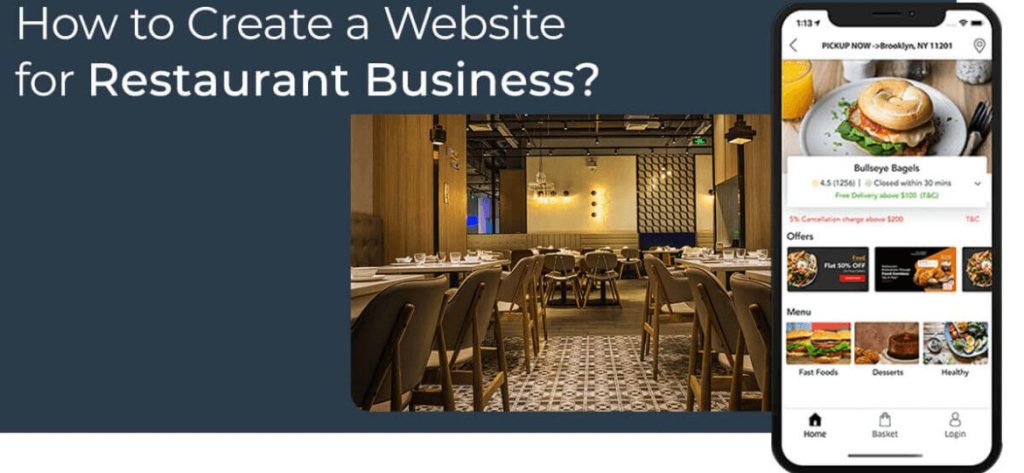
A restaurant or cafe website’s cost in 2026 depends on scope, features, and integrations: a polished brochure site sits at the entry level, a custom site with online ordering and reservations in the mid-range, and a multi-location platform with POS, delivery, and loyalty integrations at the enterprise-scale end. Most independent restaurants and cafes launch well in the first two tiers; the top tier is for groups and chains.
Your website is now the front door to your restaurant. Before anyone tastes the food, they check your menu, your hours, your photos, and whether they can book or order in a couple of taps. A fast, mobile-first site that does those things well pays for itself in covers and orders. This guide covers what a restaurant website costs in 2026, the features that matter, the tech stack and integrations, how long a build takes, what drives the price, and how we approach web development for hospitality businesses.
Prefer a no-code stack? See our Webflow website development.
Key takeaways
- A brochure restaurant site sits at the entry level; a site with ordering and reservations in the mid-range; a multi-location platform at the enterprise-scale end.
- The essentials are a digital menu, mobile-first design, click-to-call and directions, photos, and fast load times.
- Online ordering and reservations are where a restaurant site earns revenue, but each adds integration cost.
- Expect roughly 2–4 weeks for a brochure site and 6–12 weeks for a custom ordering-and-booking build.
- Owning your ordering channel avoids per-order commissions charged by third-party delivery marketplaces.
How much does a restaurant website cost?
Restaurant website costs cover a wide range because “website” can mean a simple, beautiful brochure or a full ordering-and-booking platform. The right tier depends on whether you mainly need to be found and look good, or whether you want the site to take orders and reservations directly. The ranges below are 2026 market rates for custom web builds; they are ranges, not a quote, because features and integrations drive the figure. We provide a transparent quote after a short scoping call.
| Tier | Investment level | What it includes |
|---|---|---|
| Brochure | Entry-level | Mobile-first design, digital menu, photos, hours, location and directions, contact, basic SEO |
| Ordering & booking | Mid-range | Custom design, online ordering and payments, reservations, CMS for self-editing, gift cards, stronger SEO |
| Multi-location platform | Enterprise-scale | Multiple locations, POS and delivery integrations, loyalty, catering, accounts, analytics dashboards |
Beyond the build, plan for hosting, a domain, and ongoing maintenance, plus payment-processing fees on orders. Owning your ordering channel is often the strongest financial argument for a custom site: it avoids the double-digit per-order commissions that third-party marketplaces charge, and those savings can cover the build within a year for a busy kitchen. For how web budgets are structured more broadly, our custom software development cost guide is a useful companion.
Must-have features of a restaurant website
Most restaurant websites fail on the basics, not the fancy features. Diners on their phones want a few things immediately, and getting those right matters more than any extra. Here is what earns its place, in the order most restaurants should prioritize.
A fast, mobile-first design. The majority of restaurant site visits are on a phone, often while someone is deciding where to eat right now. If the site is slow or hard to use on mobile, you lose the visit. Speed and clarity on a small screen are the foundation everything else sits on.
An always-current digital menu. Not a PDF, a real web page that loads instantly, reads well on mobile, and can be updated in minutes when prices or dishes change. The menu is the single most-visited page on a restaurant site, so it deserves the most care.
Hours, location, and one-tap actions. Clear opening hours, an embedded map with directions, and buttons to call or navigate in a single tap. These reduce friction for the visitor who has already decided and just needs to act.
Photography. Appetizing, real photos of your food and space. Imagery does more to drive a visit than any paragraph of copy, and it is worth investing in a proper shoot.
Online ordering. Pickup and delivery ordering with payment, ideally on your own site so you keep the margin instead of paying marketplace commissions. This is where a website turns into a revenue channel rather than a brochure.
Reservations. In-page booking, either custom or via a provider like OpenTable or Resy, so a diner can secure a table without a phone call. Even for walk-in-heavy spots, online booking captures the planners.
SEO and local search. Structured data for your menu, hours, and location so you show up in Google and map results, plus a Google Business Profile kept in sync. Being found locally is most of the battle for a restaurant.
A strong sequence is to launch with a fast mobile site, menu, photos, and one-tap actions, then add ordering and reservations once the foundation is solid. That keeps the first build affordable while capturing the essentials that drive visits.
Tech stack and integrations
There is no single right stack for a restaurant website; there is a right stack for your goals. The main decision is how much you need to edit yourself and how much custom functionality you need.
For a brochure or ordering site, a well-built WordPress site or a modern site builder is often the pragmatic choice. It lets your team update the menu, hours, and photos without a developer, integrates with ordering and reservation plugins, and keeps costs down. The craft is in doing it properly: clean, fast, mobile-first, and secure, rather than a bloated template stuffed with plugins.
For a custom platform, especially multi-location or heavy ordering volume, a modern JavaScript stack (React or Next.js on the front end, Node.js on the back end) gives you full control over the ordering flow, performance, and integrations. This is the route when the website is effectively a product, not a marketing page.
Either way, the integrations are what make a restaurant site work:
- Payments: Stripe, Square, or PayPal for secure online orders and deposits.
- Ordering and delivery: your own ordering system, or integrations with providers, balanced against the commissions they charge.
- Reservations: OpenTable, Resy, or a custom booking module synced to your floor plan.
- POS: Toast, Square, or Clover so online orders flow into the same system as in-house tickets and you avoid double entry.
- Marketing: email capture, a Google Business Profile, and menu and local-business structured data for search and maps.
The right combination depends on your POS, your order volume, and how hands-on your team wants to be. Matching the stack and integrations to how your restaurant actually operates is the part we scope carefully before building, because a mismatch here creates daily friction for your staff.
How long it takes to build
A brochure restaurant site usually takes 2 to 4 weeks from kickoff to launch. A custom site with online ordering and reservations typically takes 6 to 12 weeks, and a multi-location platform with POS and delivery integrations runs longer. The timeline depends far more on content readiness and integrations than on design.
A realistic sequence starts with discovery and content: agreeing on the pages, gathering your menu, photos, and copy, and this is usually the phase that slows projects down, because a site cannot launch without its content. Booking a photo shoot early is the best thing an owner can do to keep the schedule on track. Design then takes about a week or two, establishing a mobile-first look that matches your brand. Build follows, wiring up the pages, menu, and CMS, and for ordering-and-booking sites this is where payment, reservation, and POS integrations are connected and tested. Testing and launch covers mobile testing, speed optimization, and search setup before go-live.
The fastest path to being online is to launch a strong brochure site quickly, start capturing visits and local search, then add ordering and reservations as a fast second phase. That gets your front door open in weeks rather than waiting months for everything at once.
What drives the cost
The difference between a simple brochure site and a full ordering-and-booking platform comes down to a few clear choices. Knowing them lets you spend where it counts.
Online ordering and payments. Adding your own ordering system with payment is the biggest single step up from a brochure site, because it involves cart logic, payment security, and POS syncing. It is also usually the feature with the clearest return, since it replaces commission-charging marketplaces.
Reservations and table management. Simple booking links are cheap; a custom reservation system synced to your floor plan and covers is a larger build.
Custom versus template design. A distinctive custom design costs more than a themed template but sets your restaurant apart and photographs better. For many independents a beautifully executed template hits the sweet spot; for a signature brand, custom is worth it.
Number of locations. Each additional location multiplies content, menus, and often ordering and POS configuration, which is the main jump into the platform tier.
POS and delivery integrations. Connecting Toast, Square, or Clover and delivery providers so orders flow to one place saves staff time forever but adds build and testing cost.
Content and photography. Professional photos and well-written menu descriptions are an investment that lifts every other part of the site. If keeping the site fresh and updated after launch is a concern, an ongoing IT staff augmentation or maintenance arrangement keeps a developer available without a full-time hire.
How EchoInnovate IT builds restaurant websites
EchoInnovate IT is an India-based custom and white-label software development company with 12 years of experience and a team of 50+ people. We have shipped 500+ products, most under our clients’ own brands, and hold a 5.0 rating across 6 verified Clutch reviews. For a restaurant or cafe, that means you get a team that has built fast, mobile-first sites with real ordering and booking before, and knows how to keep them easy for your staff to run.
We start with a short scoping call to understand your restaurant, how you take orders and reservations today, and what you want the site to do. We then design a mobile-first site around your menu and brand, build it on a stack you can maintain, and integrate ordering, payments, reservations, and your POS so everything flows to one place. We handle speed optimization and local-search setup so you get found, and after launch we can maintain and extend the site as you add locations or features. Because we run a dedicated-team model, you get senior delivery without the overhead of hiring in-house.
Whether you need a quick brochure site or a multi-location ordering platform, we match the build to how your restaurant actually operates rather than forcing a template. Explore our web development services, see how we work as a full-stack software development company, or read about ecommerce website development if online sales are central to your plans.