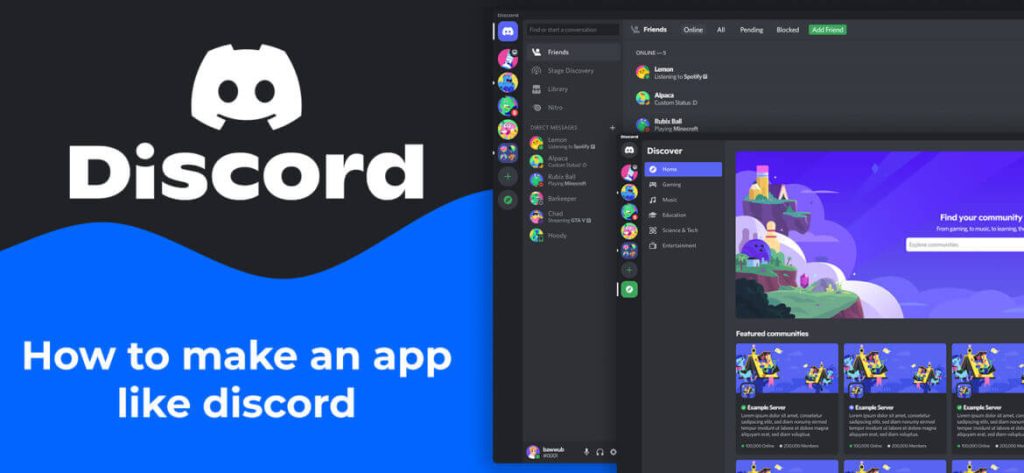
Building an app like Discord is a significant investment in 2026, driven by real-time voice, video, and chat at scale. A focused MVP with text channels, servers or groups, direct messages, and basic voice sits at the entry level. A production community platform with low-latency group voice and video, screen sharing, roles and permissions, and moderation tools moves into the enterprise-scale range. This guide breaks down features, tech stack, timeline, and the real cost drivers so you can budget with confidence, then shows how EchoInnovate IT builds mobile apps for community and social founders. We build under our own name and as a white-label partner, with 500+ products shipped over 12 years and a 5.0 rating across 6 verified Clutch reviews.
- A chat-and-servers MVP is an entry-level investment; a full voice-and-video community platform is enterprise-scale.
- Real-time voice and video at low latency is the hardest and most expensive part, not the chat.
- Most teams ship a chat MVP in 4–6 months; a full Discord-style platform takes 8–14 months.
- Infrastructure cost is ongoing: voice/video minutes, message storage, and scaling are real monthly line items, not just build cost.
- Using a real-time infrastructure provider (for voice/video and chat) cuts build time and risk versus building the media servers from scratch.
How much does it cost to build an app like Discord?
A Discord-style app is a real-time communication platform, and the budget scales with how much live voice and video you support. Text chat and servers are well-understood; low-latency group voice, video, and screen sharing are where cost and engineering risk concentrate. The tiers below show the relative investment level for a platform built by an experienced team. They are planning guides, not quotes; we give you a transparent quote after a short scoping call.
| Tier | What you get | Investment level |
|---|---|---|
| MVP | Servers/groups, text channels, direct messages, media sharing, push notifications, basic 1:1 voice | Entry-level |
| Growth | Group voice channels, roles and permissions, threads, reactions, presence, search, moderation basics | Mid-range |
| Scale | Group video and screen sharing, bots and integrations, advanced moderation, monetization, high-scale infrastructure | Enterprise-scale |
Remember that infrastructure is an ongoing cost, not just a build cost: voice and video minutes, message storage, and scaling show up as monthly line items. For a broader view of mobile budgets, see our mobile app development cost guide, and to validate the community before the full build, an MVP for startups approach keeps early spend focused.
Must-have features of a Discord-style app
Discord succeeds because it makes communities feel alive: instant messages, casual voice you can drop into, and roles that let communities govern themselves. Build the chat and community structure first, then layer voice, video, and moderation. Here is the feature set that matters most, roughly in build order.
- Servers and channels. Communities (servers) that contain text and voice channels, the core organizing structure.
- Real-time text chat. Instant messaging with media, links, reactions, threads, mentions, and typing indicators.
- Direct and group messages. Private conversations alongside community channels.
- Voice channels. Drop-in group voice with low latency, the signature Discord experience.
- Video and screen sharing. Group video calls and screen sharing for gaming, study, and work communities.
- Roles and permissions. Granular control over who can see and do what, essential for community governance.
- Presence and status. Online, idle, and custom statuses, plus who is in which voice channel.
- Notifications. Per-channel and per-server notification controls to manage noise.
- Moderation and safety. Bans, mutes, reporting, spam and abuse controls, and audit logs.
- Bots and integrations. An API or webhook layer so communities can extend the platform.
Ship servers, text chat, direct messages, media, and basic voice in the MVP. Group video, advanced moderation, and bots follow once the community core is working and used.
Tech stack and real-time infrastructure
The defining challenge is real-time infrastructure: delivering messages instantly and carrying group voice and video with low latency to thousands of concurrent users. Most teams use proven infrastructure providers for the media layer rather than building media servers from scratch, which cuts time and risk. A typical 2026 stack looks like this:
- Apps: Flutter or React Native for iOS and Android, plus a desktop and web client, since community apps are used everywhere.
- Real-time messaging: WebSockets with a scalable pub/sub layer; a managed chat provider (such as a real-time messaging SDK) or a custom service on Elixir/Phoenix or Go for high concurrency.
- Voice and video: WebRTC via an SFU (selective forwarding unit); a provider like Agora, LiveKit, or Twilio, or a self-hosted media server (mediasoup, Janion-style SFU) when you need control at scale.
- Backend: Node.js, Go, or Elixir microservices; PostgreSQL plus a fast store (Cassandra or ScyllaDB) for high message volume; Redis for presence and sessions.
- Media and storage: object storage with a CDN for uploads and attachments.
- Cloud and ops: AWS or Google Cloud with autoscaling, plus observability tuned for real-time latency.
The build-versus-buy decision on voice and video is the single most important architectural choice, and it drives both build cost and monthly infrastructure cost. Our mobile app development team builds the clients, and our software development company services deliver the real-time backend and media architecture around them.
How long it takes to build
A chat-and-servers MVP with direct messages and basic voice usually takes 4 to 6 months. A full Discord-style platform with group voice and video, roles, moderation, and bots takes 8 to 14 months. A phased plan looks like this:
- Weeks 1–3 — Discovery and architecture: real-time design, voice/video build-versus-buy decision, data model for servers and channels, and wireframes.
- Weeks 4–16 — MVP build: servers and channels, real-time text chat, direct messages, media sharing, notifications, and basic voice.
- Weeks 17–32 — Growth: group voice channels, roles and permissions, threads, reactions, presence, search, and moderation basics.
- Weeks 33–56 — Scale: group video and screen sharing, bots and integrations, advanced moderation, monetization, and scaling for concurrency.
Latency and scale testing under real concurrent load is the step teams underestimate; a chat that feels instant with ten users can lag with ten thousand, so budget load testing and tuning. If you need specialist capacity for the WebRTC or real-time backend work, our IT staff augmentation services add vetted engineers to your team for the phase you need them.
What drives the cost and how you make money
Five factors move the budget most: the depth of real-time voice and video (1:1 versus large group calls with screen sharing); build-versus-buy for the media layer; the number of clients you support (mobile, desktop, web); moderation and safety requirements; and team location. Onshore rates run several times higher than offshore for comparable quality, which is why many teams build with an offshore or dedicated-team partner. See offshore rates by country for current benchmarks. And keep ongoing infrastructure cost in the model, because voice/video minutes and storage grow with usage.
On revenue, communities monetize differently from marketplaces. Common models for a Discord-style app include:
- Premium subscriptions. A Nitro-style tier with perks like higher upload limits, better streaming quality, and customization.
- Server or creator monetization. Paid memberships, tips, or subscriptions that let community owners earn.
- Boosts and cosmetics. Purchasable upgrades and cosmetic items.
- Marketplace or platform fees. A cut of creator or bot-marketplace transactions.
The way to control the budget is to launch a focused chat-first MVP with basic voice, prove the community loop, then invest in group video and scale once people are actually talking.
How EchoInnovate IT builds your app
EchoInnovate IT is an India-based custom and white-label software development company with 12 years of experience, 50+ employees, and 500+ products shipped, most of them under our clients’ own brands. We hold a 5.0 rating across 6 verified Clutch reviews. For a Discord-style app, we assign a dedicated team: a product designer, client engineers for mobile, desktop, and web, backend engineers for the real-time messaging and presence services, a WebRTC specialist for voice and video, and a QA lead who load-tests concurrency.
Our process is answer-first. We start with a short scoping call, make the build-versus-buy decision on the media layer with you, agree on the MVP, and give you a transparent quote tied to real requirements rather than a guess. We build in two-week sprints with a working demo at the end of each, and we test latency and scale early instead of at the end. When you need extra real-time capacity for a phase, our IT staff augmentation adds vetted engineers without long-term hiring. Because most of our work ships under partners’ brands, white-label delivery of a community platform is routine for us.