The cost of building a dog walking app like Wag or Rover ranges from an entry-level budget to an enterprise-scale investment depending on scope, and the build takes roughly 3 to 8 months from kickoff to a production launch. A lean MVP for a single city sits at the low end; a multi-city marketplace with real-time GPS tracking, background checks, insurance, and dispatch sits at the high end.
This guide is written for founders and business owners planning the build, not just the engineers who will write the code. It walks through what these apps actually include, honest 2026 market cost ranges, the must-have features for each type of user, the tech stack and integrations behind the product, realistic timelines, what drives the price up or down, and how to launch faster by starting with an MVP.
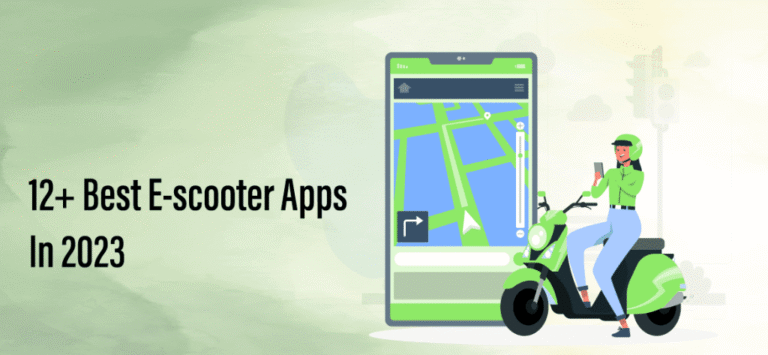
If you are comparing on-demand concepts, our guide to the best scooter apps covers similar marketplace mechanics, and our mobile app development services page explains how we scope and staff a build like this end to end.
Key takeaways
- A dog walking app like Wag or Rover needs an entry-level budget for an MVP, a mid-range budget for a growth build, and a larger investment for a multi-city platform (2026 market ranges).
- Every build is really three connected apps: a pet-owner app, a dog-walker app, and an admin dashboard.
- Real-time GPS tracking, in-app payments, scheduling, and ratings are the core of the experience — and the biggest cost drivers.
- The pet-care app market is large and growing; on-demand pet services are a well-funded category, which is why founders keep entering it.
- Timelines run about 3–5 months for an MVP and 5–8 months for a feature-rich release; starting with an MVP is the fastest, cheapest path to launch.
In this article
- What a Dog Walking App Like Wag or Rover Actually Includes
- How Much Does It Cost to Build a Dog Walking App in 2026?
- Must-Have Features, by App
- The Tech Stack and Integrations Behind a Dog Walking App
- How Long Does It Take to Build a Dog Walking App?
- What Actually Drives the Cost
- How to Launch Faster and Cheaper: Start With an MVP
- How EchoInnovate IT Builds Dog Walking and On-Demand Apps
- Frequently Asked Questions
What a Dog Walking App Like Wag or Rover Actually Includes
A dog walking app looks like one product to the customer, but under the hood it is a small marketplace made of three connected pieces:
- Pet-owner app: dog owners create a profile for their pet, browse and book walkers, track a walk live on a map, pay, and leave a rating.
- Dog-walker app: independent walkers set their availability, accept or decline requests, navigate to the pickup, start and end walks with GPS, send photo and message updates, and get paid.
- Admin dashboard: the operations layer where your team approves walkers, monitors active walks, handles disputes and refunds, sets commission rates, and reads analytics.
Apps like Wag and Rover succeed because they remove friction from a real, recurring need: busy owners who want a trusted person to walk their dog on short notice or on a schedule. That means the product has to feel safe and reliable, not just functional. Trust features — verified walker profiles, background checks, live tracking, in-app messaging, and insurance — are as important as the booking flow itself. When you scope a build, plan all three apps plus the trust layer together, because they share one backend, one payments system, and one set of business rules. Treating any one of them as an afterthought is the most common reason early on-demand products stall after launch.
How Much Does It Cost to Build a Dog Walking App in 2026?
There is no single price for a dog walking app because the number depends entirely on scope: how many features, how many platforms, how much real-time infrastructure, and which team builds it. The ranges below are market ranges for 2026, based on typical on-demand marketplace builds — not our fixed prices. They give you a realistic planning band before you talk to anyone.
| Tier | What it includes | Market range |
|---|---|---|
| MVP (single city) | Core booking loop, owner + walker apps, basic scheduling, simple payments, ratings | Entry-level |
| Growth | Real-time GPS tracking, advanced scheduling, in-app payments & payouts, ratings & reviews, notifications, chat | Mid-range |
| Scale (multi-city) | Dispatch & matching, background checks, insurance, fraud controls, analytics, multi-region ops | Higher |
A few things move you within these bands. Building for both iOS and Android at once costs more than one platform. Real-time tracking and dispatch add backend and infrastructure work. Third-party integrations such as background checks and insurance carry both build time and per-transaction fees. And the location and seniority of your team changes the rate more than almost anything else, which is why many founders build with an offshore or dedicated team to control cost. For a deeper breakdown of the variables, see our mobile app development cost guide. We do not publish fixed prices because scope drives everything; we give a transparent quote after a short scoping call so the estimate matches what you actually need.
Must-Have Features, by App
It helps to plan features per user, because each app has a different job. Here is the practical feature set for a Wag- or Rover-style product.
Pet-owner app:
- Pet and owner profiles (breed, size, medical notes, vet contact)
- Search and filter for nearby walkers
- Instant or scheduled booking
- Real-time GPS tracking of the active walk
- In-app chat and photo updates
- Secure in-app payments and tipping
- Ratings and reviews
- Walk history and receipts
- Push notifications for booking status
Dog-walker app:
- Walker onboarding and verification
- Availability calendar
- Accept or decline requests
- Turn-by-turn navigation to the pickup
- Start/stop walk with GPS logging
- In-walk photo and message sharing
- Earnings dashboard and payout requests
- A ratings view
Walkers also need a clear way to report issues during a walk.
Admin dashboard: walker approval and background-check status, live map of active walks, booking and payment oversight, dispute and refund handling, commission and pricing controls, promotions and referral management, and analytics on bookings, retention, and walker supply. Across all three, the shared essentials are scheduling, in-app payments, ratings, notifications, and reliable real-time tracking — these define the experience and, not coincidentally, are the features that most affect the budget.
The Tech Stack and Integrations Behind a Dog Walking App
The stack for a dog walking app is built around location and real-time updates. For the mobile apps, most 2026 teams choose a cross-platform framework such as Flutter or React Native so one codebase ships to both iOS and Android, which cuts build cost and keeps feature parity across platforms. Native (Swift, Kotlin) is an option when you need the deepest device integration, but for a marketplace app cross-platform is usually the pragmatic choice.
The critical integrations are what make the product feel alive:
- Maps and geolocation (Google Maps or Mapbox) for walker discovery, navigation, and route display.
- Real-time tracking using a live-data layer (WebSockets or Firebase) so owners watch the walk move on the map second by second.
- Payments through Stripe (or Braintree) with a marketplace payment setup that handles owner charges, walker payouts, tips, and your commission split.
- Push notifications via Firebase Cloud Messaging or APNs for booking status, walk start/end, and messages.
- Background-check and insurance APIs (for example Checkr for verifications) to screen walkers and attach coverage to each walk.
On the backend, a cloud setup on AWS or Google Cloud handles the API, database, matching logic, and media storage for the photo updates. The real engineering effort concentrates in the real-time tracking and the payments-plus-payouts flow — get those two right and the rest of the app is standard marketplace work. Our mobile app development team scopes this stack per product rather than forcing a template, so the architecture matches your feature list and budget.
How Long Does It Take to Build a Dog Walking App?
Timelines track scope closely. A focused MVP usually takes 3 to 5 months from kickoff to store submission: roughly two to three weeks of discovery and design, then development sprints for the owner app, walker app, admin panel, and the shared backend, followed by QA and launch. A growth build with real-time tracking, payments and payouts, chat, and reviews runs about 5 to 8 months, because those systems need careful engineering and heavier testing. A multi-city, scale-grade platform with dispatch, background checks, insurance, and analytics typically runs 8 months or more and often continues as a rolling roadmap rather than a single release.
Two factors change these numbers most. Team size and structure matter: a dedicated cross-functional team building in parallel is much faster than a small team building sequentially. And decision speed on your side matters just as much — fast feedback on designs, quick access to test devices, and clear priorities keep sprints moving. A realistic plan sequences the highest-risk work early: real-time tracking and payments should be proven in the first half of the project, not left until the end, so there are no surprises before launch. Building the MVP first and adding the heavier features in later phases is the most reliable way to hit an early, confident launch date.
What Actually Drives the Cost
Five variables explain almost all the difference between a lean build and a far larger one.
1. Feature depth. A booking loop with simple payments is modest work. Adding live tracking, in-app chat, tipping, reviews, referrals, and promotions multiplies the screens, the backend logic, and the QA surface. Every trust and safety feature you add moves the number up.
2. Number of platforms. Shipping iOS and Android together costs more than one platform. Cross-platform frameworks reduce this gap, but two stores still mean two review processes, two sets of device testing, and platform-specific unusual situations.
3. Real-time infrastructure. Live GPS tracking and dispatch are where marketplace apps get expensive. Keeping locations accurate, battery-efficient, and reliable at scale is real engineering, not a plugin.
4. Third-party integrations. Background checks, insurance, mapping, and payments each add build time and ongoing per-transaction fees. These also add compliance and error-handling work that is easy to underestimate.
5. Team location and seniority. This is often the single largest lever. Comparable quality can cost very differently depending on where and how you staff the build, which is why many founders choose an offshore or dedicated-team model to stretch the budget without cutting scope. The goal is not the cheapest team — it is the right team at a rate that lets you fund the features that matter.
How to Launch Faster and Cheaper: Start With an MVP
The fastest and cheapest way to launch a dog walking app is to build a real MVP first — a version with only the features needed to prove the core loop — and expand once you have paying users. For a Wag-style product, the core loop is: an owner books a walk, a verified walker accepts it, the walk happens with live tracking, payment clears, and both sides rate the experience. Everything else, including promotions, referrals, subscription plans, and advanced dispatch, can wait.
An MVP does three useful things at once. It gets you to market in months instead of a year, so you start learning from real usage sooner. It caps your initial spend at an entry-level budget instead of committing a far larger sum before you have validated demand in a single city. And it reduces the risk in your plan, because the features you add next are chosen from real user behavior rather than guesses. Focus the MVP on one city and one clear customer, keep the walker-supply side healthy, and add tracking and analytics to the app so you can see where owners drop off. Once bookings are repeating and walkers are staying active, you have the evidence to justify the growth-tier investment — and a working product to raise on or reinvest into. Scoping the MVP tightly is the highest-leverage decision you will make on the whole project.
How EchoInnovate IT Builds Dog Walking and On-Demand Apps
EchoInnovate IT is an India-based custom and white-label software development company with 12 years of experience and 500+ products delivered — many of them on-demand marketplace apps shipped under our clients’ own brands. We build dog walking, pet-care, and other on-demand products end to end: owner app, provider app, admin dashboard, backend, and the real-time and payments infrastructure that ties them together.
How we work matters as much as what we build. We staff a dedicated team matched to your product — mobile engineers, backend, QA, design, and a project lead — and you can scale that team up or down as the roadmap changes through our IT staff augmentation services. Because we work as a white-label partner, you own the code and the IP; the product is yours, released under your brand, with no lock-in.
We sequence the risky parts — live tracking and payments — early, ship an MVP you can put in front of real users, and then build the growth features in phases against real data. Our client work carries a 5.0 rating across 6 verified Clutch reviews, and we handle store submission and ongoing maintenance after launch.
Whether you are validating a Wag-style idea in one city or scaling a multi-city platform, the model is the same: a transparent quote, a clear plan, and a team that builds it as if it were our own product.