
Talabat Business Market Size And Statistics
11 min read · Last updated: May 2026
In this article
- 1. Talabat Business Market Size And Statistics
- 2. What Is Talabat?
- 3. What Is The Talabat Business Model?
- 4. What are Talabat Revenue Models?
- 5. Must-Know Features of Talabat Delivery App
- 6. What Are The Benefits Of Talabat Business Model?
- 7. What Is The Cost Structure Of Talabat's Business Model?
- 8. Why Should You Invest In An App Like Talabat?
- 9. Key Challenges Of Talabat Business Model
- 10. Navigating Regulatory And Legal Frameworks
- 11. Conclusion
Strategic partnerships and expansion into new markets have driven Talabat’s growth. In 2019, Talabat made headlines when it joined forces with Zomato. That move made it a leading player in the market. Talabat launched in 2004. From the start, it changed the food delivery experience for both diners and restaurant owners in the MENA region. Today, it is a leader in the industry. It has reshaped how people order and enjoy their favorite meals.
What Is Talabat?
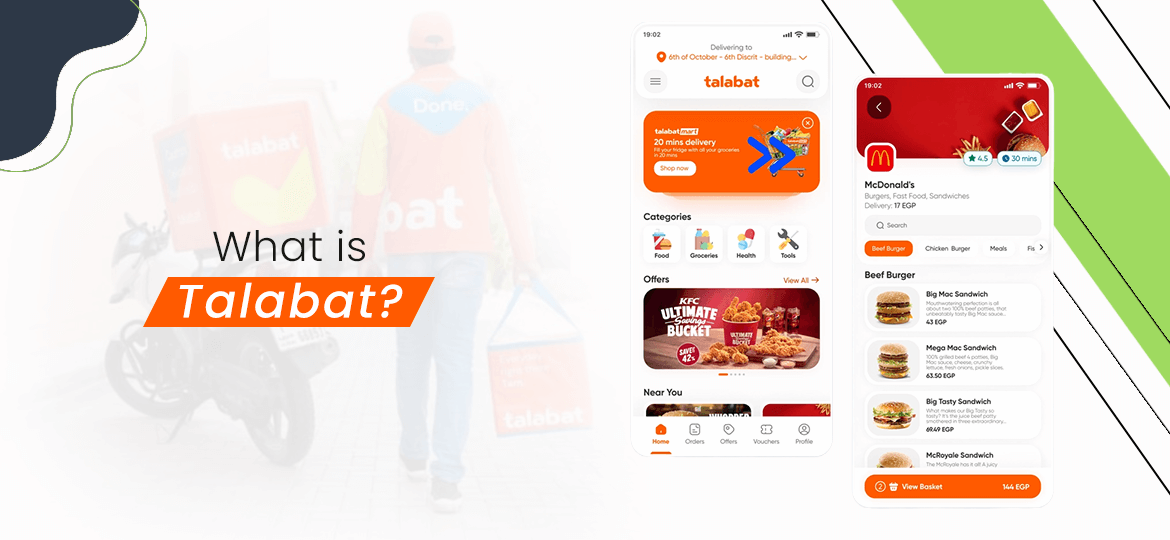
Talabat began as a food delivery app. Over time, it has grown into much more. Let’s look at the range of services Talabat now offers:
1. Food Delivery
At its core, Talabat still delivers a wide range of cuisines to your door. It works with a large network of partner restaurants. You can explore menus, place orders, and enjoy meals from home. This is its on-demand food delivery model.
2. Grocery Delivery
Talabat saw the growing demand for grocery delivery app development. So it added essential items to its services. Customers can now order groceries through the platform. They get a smooth shopping experience without leaving home.
3. q-Commerce
Talabat also moved into q-commerce, or quick-commerce, to match its customers’ busy lives. It uses its strong delivery network to bring many products to your door. This covers everyday items and specialty goods. Talabat aims to deliver them in 30 minutes or less.
Talabat’s app is easy to use, so navigating and ordering is simple. In a few clicks, customers can explore menus and customize their orders. They can also choose from several payment options. Related: mobile app development services.
Strategic partnerships and expansion into new markets have driven Talabat’s growth. In 2019, Talabat made headlines when it joined forces with Zomato. That move made it a leading player in the market. Talabat launched in 2004. From the start, it changed the food delivery experience for both diners and restaurant owners in the MENA region. Today, it is a leader in the industry. It has reshaped how people order and enjoy their favorite meals.
What Is The Talabat Business Model?
Talabat’s approach blends strong technology, smart partnerships, and a customer-first focus. At the heart of its business model sits one platform. That platform connects restaurants and customers.
Restaurant Network
Talabat partners with many restaurants to give customers wide culinary options. Through its website and mobile app, customers can browse menus and explore many cuisines. They can then place orders with just a few taps. The platform keeps the ordering process smooth and clear.
User-Friendly Platform
The Talabat website and mobile apps are very easy to use. Customers can browse restaurants, menus, and food items with little effort. This gives them a smooth and convenient experience.
Order Placement
Once an order is placed, Talabat’s technology takes over. The platform processes the order details quickly. This keeps the order accurate and the timing right between the restaurant and the customer.
Efficient Deliveries
Talabat works with a dedicated fleet of delivery partners. They handle prompt and reliable on-demand hyperlocal delivery of orders. These delivery heroes navigate the streets on their chosen transport. They bring meals right to each customer’s door.
Real-Time Order Tracking
Customers can track their orders in real time. They can follow the order’s progress from start to finish.
Multiple Payment Options
Customers can pay in several ways. Options include cash on delivery, credit or debit cards, and digital wallets. They can pick whichever method suits them best.
What are Talabat Revenue Models?
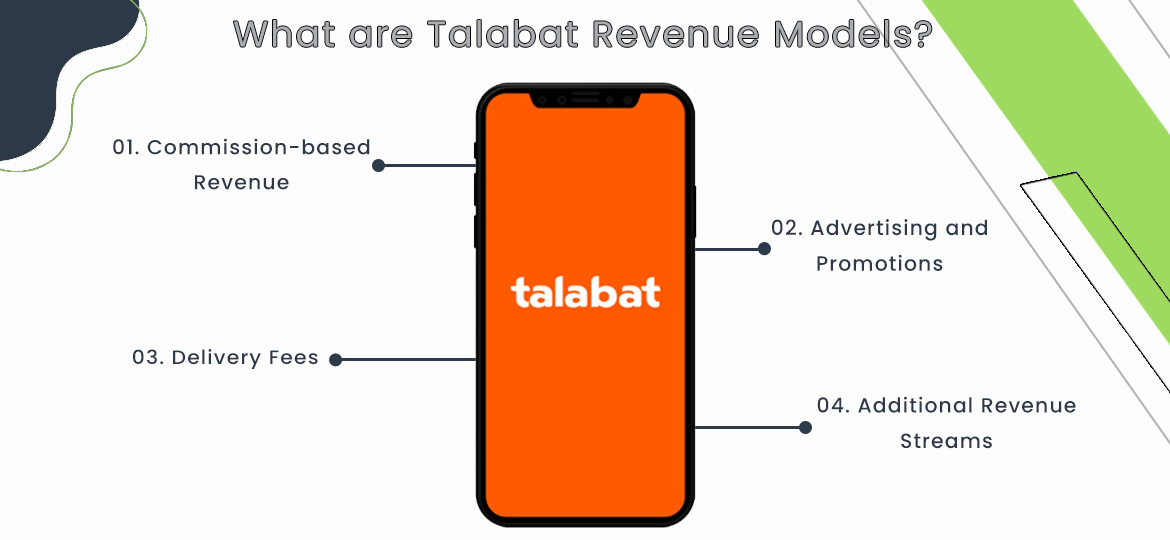
Talabat’s revenue model rests on several pillars. Each one adds to its financial stability and growth.
1. Commission-based Revenue
Talabat earns a large share of its revenue from commission fees. It charges these fees to partner restaurants. This revenue stream forms the backbone of Talabat’s business model. Related: cross-platform app development.
2. Advertising and Promotions
Advertising and promotions are another key revenue source for Talabat. It offers targeted advertising to restaurants. This lets them show their offerings to a large customer base. Talabat also runs promotional campaigns and partnerships with restaurants. These bring in customers through exclusive deals and discounts. All of this earns revenue for Talabat. It also adds value for its customers and partners.
3. Delivery Fees
Talabat charges a fee for its reliable delivery service. It keeps part of this fee, which adds to its revenue. The delivery fee model helps Talabat keep a strong fleet of delivery partners. It also helps the company hold a high level of service quality.
4. Additional Revenue Streams
Talabat has widened its revenue streams beyond food delivery. By moving into grocery delivery and q-commerce, it reaches new markets. These new markets bring extra revenue options.
Must-Know Features of Talabat Delivery App
The User Panel
Login
Customers can log in with social credentials to make the process quick. They can also log in using email.
Browse Menu
Users can browse menus from different restaurants. They can also compare prices before they order food.
Add to Cart
Users can add the items they want to the cart. Once the list is ready, they can proceed to checkout.
Offers & Discounts
Customers can enjoy special offers and discounts on the Talabat app. This helps them save money.
Track the Order
Customers can track their orders in real time. They can follow along from the moment they order until delivery.
Secure Payment Options
Talabat puts customer security first with several safe payment options. Customers can pay by credit or debit card, mobile wallet, or cash on delivery. They can choose the method that suits them best. This flexibility keeps each transaction smooth and secure.
Customer Reviews and Ratings
Talabat lets users leave reviews and ratings. They can rate both restaurants and their delivery experience. These honest reviews help other users make informed choices. They also help people pick the best dining options. Restaurants can use this feedback to improve their service and raise customer satisfaction.
Restaurant Panel
Create Profile
Restaurants can create their profiles on the Talabat app. Then they can start selling their food and services. Related: hire cross-platform developers.
Order Management
Restaurants can receive and manage orders on the Talabat app. The app helps automate and streamline their operations. It also helps them fulfill orders efficiently.
Manage Payments
Restaurants can manage their profits and expenses on the Talabat app. They can also keep track of the revenue they earn.
Manage Promotions
Restaurants can run special offers and discounts. They can also run referral and loyalty programs to boost sales.
Delivery Panel
Profile Creation
Delivery agents can create their profiles on the Talabat app. They enter details like their name, contact, and license information.
Availability Status
Delivery agents can set their status as available or not. They base this on their schedule and their plans to take more deliveries.
Order History
Delivery agents can keep track of the deliveries they make each day. They can review these in the order history section.
Track Earnings
They can track their earnings on the Talabat app. This lets them plan their deliveries around their earning goals.
What Are The Benefits Of Talabat Business Model?
They can track their earnings on the Talabat app. This lets them plan their deliveries around their earning goals.
Customer Convenience
The Talabat business model brings strong convenience to both customers and restaurants. With a few taps on a phone or clicks on a computer, customers can explore many restaurants. They can browse menus and place orders with ease. This removes the need for physical menus, phone calls, and long waits.
Wider Audience Reach
Restaurants reach a wider customer base. They can go beyond their physical locations. They can connect with millions of customers online. This boosts their sales and their visibility.
Delivery Infrastructure
Restaurants reach a wider customer base. They can go beyond their physical locations. They can connect with millions of customers online. This boosts their sales and their visibility. Related: custom software development.
Data and Analytics
Talabat offers insights into customer data and preferences. So restaurants can tailor their orders to what customers like. They can fine-tune their menus and offer custom deals and discounts. This helps them attract new customers and keep existing ones.
Transparency
Customers can track their food orders on Talabat in real time. They can follow along from the moment the restaurant accepts the order until the delivery hero arrives. This transparency gives customers peace of mind. It removes any doubt about the delivery status. Talabat also supports clear communication between customers, restaurants, and delivery partners. This keeps the whole experience smooth and hassle-free.
What Is The Cost Structure Of Talabat's Business Model?
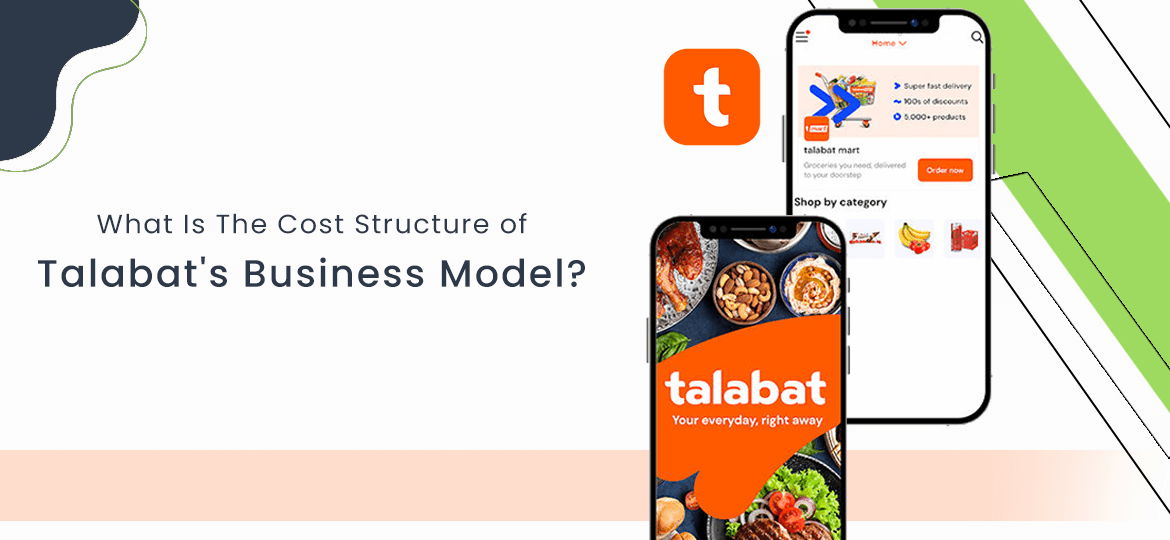
Talabat designs its cost structure with care. The goal is to deliver smooth, convenient food delivery while staying financially sound. It spreads resources across technology, infrastructure, and workforce. It also invests in marketing, delivery logistics, and customer-focused work. This balanced cost structure supports its growth and success.
| Development Feature | Time Taken | USA (relative rate) | Eastern Europe (relative rate) | India (relative rate) |
|---|---|---|---|---|
Technical Documentation | 41 Hours | Premium | Mid-range | Most affordable |
UI/UX Design | 60 Hours | Premium | Mid-range | Most affordable |
Front-End & Back-End Development | 400 Hours | Premium | Mid-range | Most affordable |
MVP Testing | 81 Hours | Premium | Mid-range | Most affordable |
Polishing & Bug-Fixing | 40 Hours | Premium | Mid-range | Most affordable |
Why Should You Invest In An App Like Talabat?
Strong Online presence
Investing in a food delivery app like Talabat helps businesses build a strong brand presence. Talabat has earned trust among both customers and restaurants. When you invest in an app like it, you use the strength of an established brand. That saves you the time and effort of building credibility from scratch.
smooth Growth
Investing in a food delivery app like Talabat can be very profitable. It also opens greater room for growth. People rely on on-demand food delivery apps, and the trend is here to stay. This is true not just in the US or the UAE. The online food delivery business is gaining strong traction worldwide.
Increase Customer Reach
Gen Z and millennials make up the largest share of food delivery app users. So if you plan to invest in the Talabat business model, target these groups. You can earn solid revenue by focusing on Gen Z and millennials.
Advanced technology
An on-demand food delivery app like Talabat can help businesses fine-tune their operations. It uses strong technology for smooth order management and efficient delivery logistics. It also supports real-time communication. This streamlines processes and helps save time and resources.
Key Challenges Of Talabat Business Model
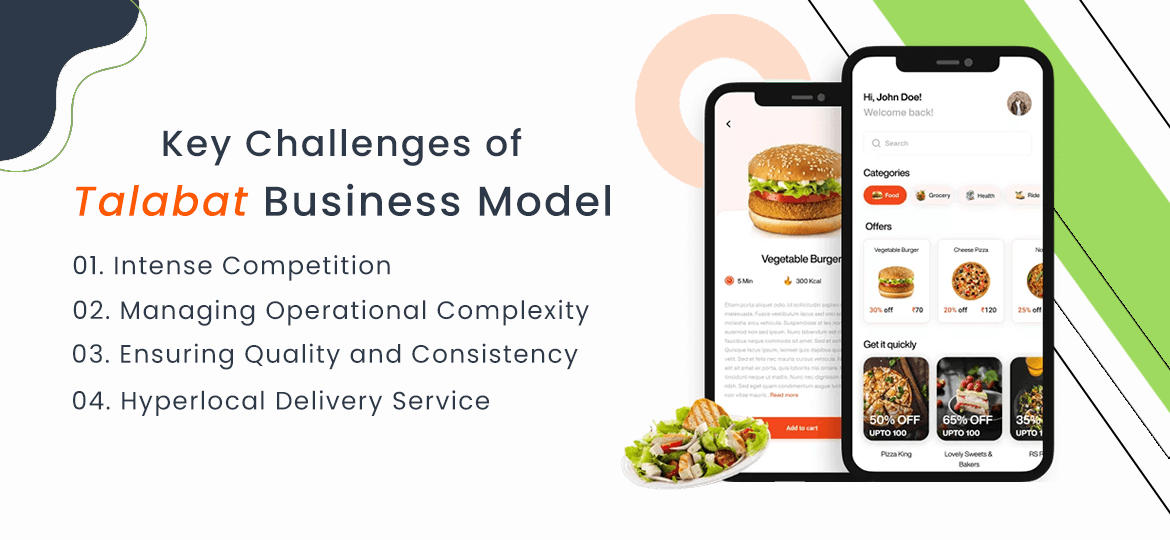
The Talabat business model has reshaped the food delivery landscape. It brings convenience and efficiency to customers and restaurant owners alike. Yet, like any successful venture, Talabat faces its share of challenges. We’ll look at the challenges it meets. We’ll also see how it works through them to stay a leader in the industry.
Intense Competition
Talabat works in a highly competitive market. New rival platforms keep emerging, each chasing a larger market share. This pressure pushes Talabat to keep improving and to stand out. It must adapt, offer unique features, and hold customer loyalty. All of this is vital in the face of strong competition.
Managing Operational Complexity
Managing a vast network of restaurants, delivery agents, and orders is complex. Talabat must coordinate these operations well. That means timely deliveries, accurate orders, and clear communication among everyone involved. Scaling the business while keeping quality high takes strong systems. It also takes streamlined processes and effective logistics. Related: AI-powered app development.
Ensuring Quality and Consistency
Talabat must watch food quality closely and meet hygiene standards. It also needs to address customer complaints quickly. Strong restaurant partnerships help protect the platform’s reputation. They also help ensure a good customer experience. Solving last-mile problems and keeping a reliable, on-time hyperlocal delivery service is key. It drives customer satisfaction and retention.
Navigating Regulatory And Legal Frameworks
Talabat must stay current on changing regulations and licensing rules. It also needs to track any changes that affect its operations. Adapting to local rules while keeping a smooth user experience across regions is hard. It calls for careful navigation and solid compliance measures.
Despite these challenges, Talabat has become a leading food delivery platform. It uses effective strategies and inventive solutions. It keeps investing in technology and hiring dedicated developers. It also streamlines operations and builds strong ties with restaurants and customers. Talabat’s drive to overcome challenges and deliver a reliable, convenient service has fueled its success.
Conclusion
Talabat has become a dominant player in the food delivery industry. It has changed how people order food and built a thriving business model. With its wide reach, focus on customer satisfaction, and steady expansion, Talabat leads the food delivery industry.
Do you want to build a food delivery app like Talabat? EchoInnovate IT, a top food delivery app development company, can help. We have deep experience building custom food delivery app solutions for clients worldwide, with strong results. Get in touch to hire food delivery app developers.
Frequently Asked Questions
Talabat is an online food delivery platform that connects customers with restaurants through a user-friendly app or website. Customers browse menus, place orders, and make payments through the platform, while restaurants receive the orders and prepare the food for delivery. Talabat coordinates the delivery logistics, ensuring a smooth experience from start to finish.
Partnering with Talabat provides restaurants with several benefits. It allows them to reach a broader customer base, increase their visibility, and tap into the growing trend of online food ordering. Talabat’s established brand and efficient operations help attract new customers and streamline order fulfillment, increasing restaurant sales and revenue.
Talabat generates revenue through various channels. It earns a commission from each order placed through its platform, typically a percentage of the total bill value. It also explores strategic partnerships and collaborations to create additional revenue streams.
The platform leverages advanced technology to facilitate smooth order management, real-time tracking, and efficient communication between customers, restaurants, and delivery agents. The user-friendly app or website ensures a smooth Online food ordering platform experience using data analytics and AI to help improve service quality and personalized recommendations.
Your food-delivery app should launch in months, not years.
Restaurant onboarding, driver dispatch, surge pricing, live order tracking, ratings, Stripe Connect splits — we’ve shipped 40+ on-demand platforms across 12 countries. We know what kills delivery startups (poor unit economics, broken dispatch logic, weak driver retention) and we build the playbooks that fix it. Tell us your city, your menu, and your KPIs — we’ll come back with a 90-day MVP plan.