Scale your team with vetted, dedicated developers who work as an extension of yours — flexible engagement, no long lock-in, and full transparency from day one.
A senior team of engineers delivering production-grade software — measured by outcomes, not hype.
From a full dedicated squad to a single specialist — pick the roles and engagement model that fit how you build. Every developer is pre-vetted for technical depth and communication, and the team scales up or down as your roadmap shifts — so you add capacity without the cost and delay of full-time hiring.
A full squad that works only on your product.
Learn moreAdd vetted engineers to your existing team fast.
Learn moreReact, Vue and Next.js specialists.
Learn moreAPIs, databases and scalable services.
Learn moreiOS, Android and cross-platform engineers.
Learn moreHire dedicated developers when you need consistent output, direct control, and a team that stays with your product long enough to understand it. This model sits between the two options most companies weigh — freelancers and full-time in-house hiring — and removes the weak points of both. The question is rarely which option is best in the abstract, but which one fits the stage your product is at right now and the pace you need to keep.
Freelancers are quick to start but usually juggle several clients at once. Availability shifts week to week, context leaks out between projects, and you carry the coordination overhead yourself. Good for a short, well-defined task; harder to rely on for a product you plan to grow.
Hiring in-house gives you control but takes months to source, interview, and onboard. You also commit to salaries, benefits, and equipment, and a wrong hire is slow and costly to unwind once the contract is signed.
A dedicated team gives you named engineers who work only on your roadmap, ramp once, and stay. You keep the ownership of in-house hiring without the fixed cost, long recruitment cycle, or the risk of being stuck with the wrong fit.
The trade-off is straightforward. Dedicated hiring trades the lowest possible hourly rate for reliability, shared context, and faster delivery over the life of a project. A freelancer can be the right call for a one-week fix, and a permanent hire makes sense for a role you are certain will exist in three years. For everything in between — an active roadmap, an unclear runway, or a plan that will change — a dedicated model carries less risk. Many teams start with one or two engineers on a software development engagement, confirm the fit, then scale. When you only need to cover a temporary gap, lighter IT staff augmentation often costs less than a rushed permanent hire once you count the time lost to sourcing and onboarding. You get in-house-level ownership, outside speed, and the freedom to change direction as priorities move.
Every developer you hire through EchoInnovate IT clears a multi-stage screen before reaching your shortlist, and the team is structured around your project rather than dropped in as loose headcount.
Candidates pass a screen on core computer-science fundamentals, a practical coding assessment in their stack, a systems-design discussion for senior roles, and a communication check. We verify real project history, so the people you meet have proven experience, not just polished resumes.
We match seniority to the work. A typical team blends senior engineers who own architecture and code review with mid-level developers who carry day-to-day delivery, so you are not overpaying for routine tasks or under-resourcing the hard ones.
Hire full-time, part-time, or hourly, and mix models across roles. Full-time suits an active roadmap, while part-time and hourly fit maintenance and smaller scopes. You can change the arrangement as the work in front of you changes.
Your team works within agreed overlap hours with your timezone, joins your standups, and stays reachable on your Slack or Teams. You speak to the engineers directly, not through a layer of account managers who slow every decision down.
The result is a team that behaves like part of your company, not a vendor kept at arm’s length. You approve the shortlist, you set the standards each sprint is measured against, and you keep the direct line to every engineer working on your product. When a role needs to change, we adjust the mix or seniority instead of restarting a search from scratch, so your delivery pace holds steady while the team evolves around it.
We pair senior engineering with a business-first mindset, so every developer you hire maps to a measurable result — not just extra headcount.

Most teams are productive within the first week. Onboarding follows a set path — kickoff, ramp-up, sprint delivery, and reporting — with the paperwork and safeguards handled up front so you can focus on the product.
We align on goals, scope, and success metrics, give your developers access to your systems, and agree on communication and sprint cadence. NDAs are signed before any code or data changes hands, so expectations are clear from the first day.
Your team studies the codebase and product context, then ships small changes first to confirm setup and calibrate with your leads. This is where shared context is built, which is what makes the later, larger work move quickly and predictably.
Work runs in your sprint cadence, usually one or two weeks, with planning, daily updates, demos, and retrospectives. You review output continuously and steer priorities as you go, rather than waiting for a single large reveal at the end.
You get regular progress reporting against the plan, and you can scale the team up or down as priorities shift. Adding or reducing a role takes days, not a fresh hiring cycle, so capacity tracks the work.
You own everything your team produces — code, designs, and documentation — from day one. If a developer is not the right fit, we replace them quickly at no extra cost, including quality assurance and testing and support roles.
Because access, ownership, and cadence are settled in that first week, the working relationship stays simple as it grows. You add capacity when a release is close, ease off once it ships, and always know who is doing what and why. That steadiness is what lets a dedicated team compound value across months of a roadmap rather than deliver a single one-off burst and disappear.
We adapt every solution to the data, compliance and workflows of your sector.
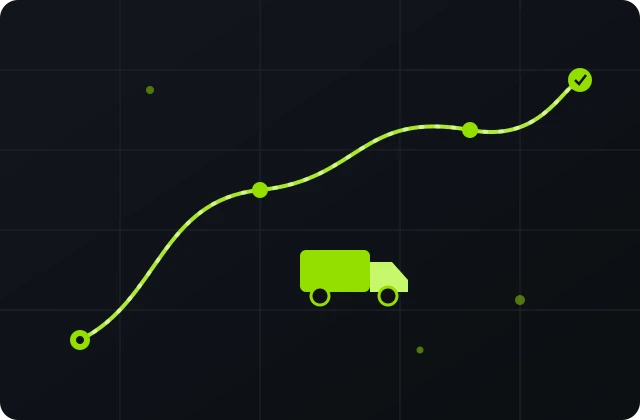
We built a custom routing and demand-forecasting platform that continuously optimizes delivery routes, cutting time on the road and fuel spend while improving on-time performance.
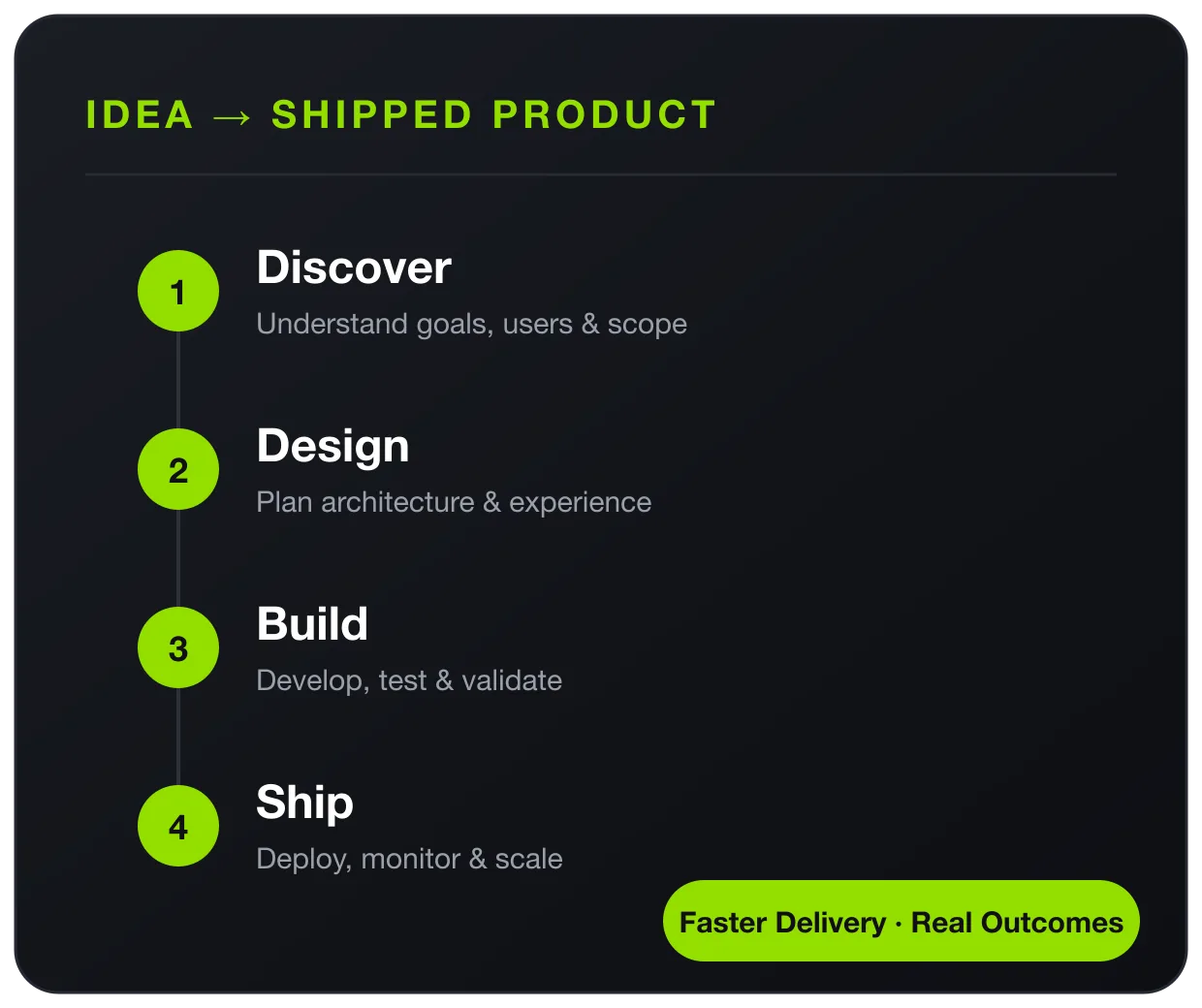
A transparent, five-stage path from kickoff to a fully scaled team.
We map goals, data and success metrics.
We design the architecture, stack and roadmap.
We build, test and validate the solution.
We ship to production with monitoring.
We optimize, refine and scale over time.
“EchoInnovate IT delivered a dedicated team that transformed our operations. The team understood our business, moved fast, and shipped something our customers actually feel every day.”
Tell us your goal and we’ll map the fastest path to a working, dedicated development team.
Get a Free ConsultationEverything you need to know about hiring dedicated developers from EchoInnovate IT.
Hiring for a specific stack? See our guide to hiring Node.js developers.
Need JavaScript talent specifically? Read how to hire a JavaScript developer.
Scaling a mobile team offshore? See our guide to hiring offshore Flutter developers.
Bring us your toughest problem. We’ll assemble a dedicated team that ships and scales it with you.
Tell us about your project and our team replies within 24 hours with a clear scope and estimate — no obligation.