An audiobook app like Audible can range from a focused MVP to a full-scale platform in 2026. A focused MVP with a catalog, streaming playback, and purchases sits at the entry level; a growth build with subscriptions, offline downloads, and personalization is a mid-range project; and a scale platform with original content tools, DRM, and multi-format support is an enterprise-scale build. The final figure depends on features, content protection, platforms, and the team you hire, so we give a transparent quote after a short scoping call rather than a fixed price. This guide breaks down every cost driver so you can budget with confidence.
EchoInnovate IT is an India-based custom and white-label development shop with 12 years of experience, 50+ employees, 500+ products shipped, and a 5.0 rating across 6 verified Clutch reviews. We build streaming and media apps like this under our own name and under our clients’ brands. Explore our mobile app development services to see how we deliver.
- An audiobook app like Audible ranges from an entry-level to an enterprise-scale build in 2026; an MVP is the entry-level tier.
- Cost is driven by streaming and offline playback, subscriptions and purchases, content protection (DRM), personalization, and platform count (iOS, Android, web).
- A typical MVP takes 4-6 months; a full platform with subscriptions and downloads takes 7-10 months.
- Audio streaming, licensing, and DRM are the features that separate an audiobook app from a simple media player.
- Start with a $1,500 fixed-price 2-week pilot sprint to validate scope and get a firm quote before committing budget.
How much does it cost to build an audiobook app like Audible?
Cost scales with scope. An audiobook app is more than a media player: it streams and protects licensed content, manages purchases or subscriptions, and keeps listeners engaged with personalization and offline access. The more of that you build, the more you invest. Below are the three tiers we most often scope, shown as relative investment levels. These are relative levels, not quotes; your real number comes after a short scoping call.
| Tier | What you get | Investment level |
|---|---|---|
| MVP | iOS + Android, catalog and search, streaming playback with a full-featured player, user accounts, in-app purchase of titles, admin panel | Entry-level |
| Growth | Everything in MVP plus subscriptions, offline downloads, bookmarks and sleep timer, personalized recommendations, reviews and ratings, push notifications | Mid-range |
| Scale | Everything in Growth plus DRM and secure content delivery, creator and publisher tools, multi-format (audio plus ebook), multi-language, advanced analytics | Enterprise-scale |
Most founders launch at the MVP tier, learn what listeners actually use, then reinvest in the Growth features that data supports. That staged approach keeps the initial budget defensible. See our detailed mobile app development cost guide for a wider breakdown of how app budgets are structured.
What makes an app like Audible
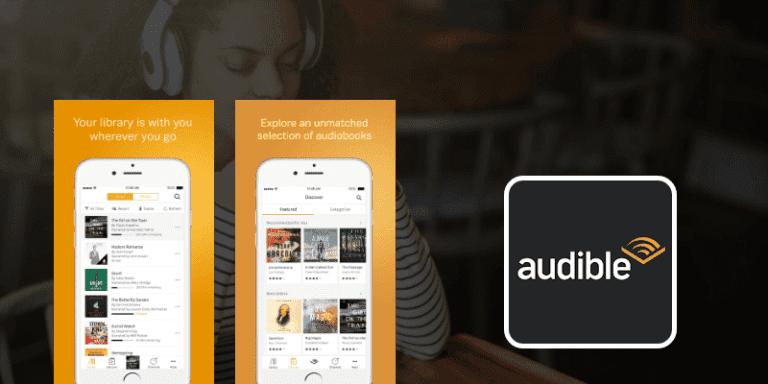
Audible is the market-leading audiobook platform. Listeners browse a large catalog, buy titles outright or spend monthly credits from a subscription, and listen through a polished player with variable speed, bookmarks, chapters, and offline downloads. Behind the scenes, the app streams licensed audio securely, syncs a listener’s position across devices, and recommends the next title based on listening history.
When founders ask us to build “an app like Audible,” they usually want that same core experience: a rich catalog, a great player, reliable purchases or subscriptions, and content that is protected against piracy. The complexity that sets an audiobook app apart from a simple podcast player is content licensing, DRM, and the billing logic behind credits and subscriptions. Knowing which of these you need at launch is the biggest lever on your budget, and it is exactly what a scoping call resolves.
Must-have features for an audiobook app
An audiobook app succeeds on playback quality, discovery, and trust. These are the features we consider non-negotiable for a credible launch, grouped by listener experience, monetization, and the platform layer.
Listener experience:
- Catalog browsing with categories, search, and rich title pages (cover, samples, narrator, runtime)
- A full-featured audio player: variable speed, skip, chapters, bookmarks, sleep timer, and background playback
- Cross-device position sync so listeners resume exactly where they left off
- Offline downloads for listening without a connection
- Personalized recommendations and a “continue listening” shelf
Monetization and accounts:
- Sign-up, profiles, and a personal library
- In-app purchase of individual titles and subscription or credit plans
- Free samples and previews to drive conversion
- Reviews, ratings, and wishlists
Platform and content protection:
- Secure streaming and DRM to protect licensed audio
- Content management for uploading, tagging, and publishing titles
- Analytics on listening, conversion, and churn
- Push notifications and email for new releases and re-engagement
Ship the player, catalog, and purchase flow first. DRM depth, creator tools, and multi-format support are Growth and Scale investments best added once you have listeners. Our mobile app development team helps you sequence this so you launch sooner and spend smarter.
Tech stack and integrations
There is no single correct stack, but a media-streaming app has a sensible default that keeps delivery smooth and content protected. A common, proven setup looks like this:
- Mobile apps: React Native or Flutter for a single codebase across iOS and Android, which keeps build and maintenance cost down. Native audio modules handle background playback and lock-screen controls.
- Backend: Node.js or Django with a PostgreSQL database for catalog, users, and entitlements.
- Audio delivery: adaptive streaming (HLS) served through a CDN so playback stays smooth on any connection, with encrypted storage on AWS S3 or Cloudflare R2.
- Content protection: DRM (such as Widevine and FairPlay) plus signed, expiring URLs to prevent unauthorized downloads.
- Web: Next.js for an SEO-friendly catalog and web player.
Key integrations usually include in-app purchase and subscription billing (Apple, Google, and Stripe for web), push and email (Firebase, Twilio), analytics, and a recommendation engine. Choosing a cross-platform stack is one of the biggest cost decisions; our React Native vs Flutter comparison explains the trade-offs, and React Native app development is one of our core services.
How long does it take to build?
Timeline tracks scope closely. As a rule of thumb:
- MVP (4-6 months): discovery and design, then catalog, search, a solid player, accounts, purchases, and an admin panel across iOS and Android.
- Growth build (7-9 months): add subscriptions and credits, offline downloads, personalization, reviews, and notifications.
- Scale platform (9-10 months+): add DRM, creator and publisher tools, multi-format and multi-language, and advanced analytics, usually phased after launch.
A dedicated team of five to seven, one to two mobile engineers, a backend engineer, a designer, a QA engineer, and a project lead, is a typical shape for this build. Audio playback and DRM need careful QA across devices, so budget real testing time. Working in two-week sprints, you see a usable player early and steer with real feedback. If you need specialists mid-project, our IT staff augmentation services let you scale the team up or down without long hiring cycles.
What drives the cost
Six factors move the budget more than anything else:
- Audio streaming and playback depth. Adaptive streaming, background playback, chapters, and cross-device sync are more engineering than a simple play button, and they define the listening experience.
- Content protection (DRM). Protecting licensed audio against piracy adds real work but is often required by rights holders.
- Monetization logic. Subscriptions, credits, and per-title purchases each carry billing and entitlement complexity across Apple, Google, and web.
- Number of platforms. iOS, Android, and a web player each need building and testing; a cross-platform framework reduces this.
- Personalization. Recommendation engines and “continue listening” logic improve retention but add data and engineering work.
- Team location and model. Onshore rates can be several times offshore rates for comparable quality, which is why most cost-conscious founders build with an offshore dedicated team.
The single biggest savings lever is team model. Our guide to offshore software development rates by country shows how much location affects the bill, and how to hire offshore developers covers doing it without quality risk.
How audiobook apps make money
Revenue design should shape the build, so plan it early. The proven models for an audiobook app are:
- Subscription: a monthly plan for unlimited listening or a set number of credits, the model Audible popularized and the most predictable revenue.
- A la carte purchases: buy individual titles outright, ideal for listeners who do not want a subscription.
- Credits: monthly credits redeemable for any title, blending subscription predictability with a sense of ownership.
- Freemium and ads: free listening on selected titles supported by advertising, with an upgrade path.
- Publisher and creator revenue share: onboard rights holders and independent authors and share sales, expanding your catalog without buying all content upfront.
Most successful platforms combine a subscription with a la carte purchases. Deciding your primary model up front determines which billing and entitlement features are revenue-critical, and that keeps the first build focused on what pays back.
How EchoInnovate IT builds audiobook apps
EchoInnovate IT is an India-based custom and white-label software development company with 12 years in business, 50+ employees, and 500+ products shipped, most of them under our clients’ own brands. We hold a 5.0 rating across 6 verified Clutch reviews. For a streaming product like an audiobook app, we assign a dedicated team, work in transparent two-week sprints, and start with a discovery phase that turns your idea into a scoped, priced plan before any production code is written.
We build cross-platform to control your cost, engineer the audio-delivery and DRM layer carefully, handle the app-store releases, and stay on for maintenance after launch. Because so much of our work is white-label, you own the product and the brand; we are the engineering team behind it. Whether you need a full build or extra hands, our mobile app development and software development company services cover the entire lifecycle, and you can add specialists any time through IT staff augmentation.