Quick Summary
12 min read · Last updated: May 2026
Python has emerged as a top choice for developers worldwide because of its adaptability and a vast selection of libraries. With an easy-to-understand yet comprehensive overview of each tool’s capabilities, let’s plunge into the details of Python libraries and web scraping tools. These tools will revolutionize your coding experience, regardless of your level of programming experience or where you are in your Python learning process.
Python web scraping tools have become essential for businesses and developers across the United States who rely on data automation, AI-driven analytics, and machine learning. Whether you’re building a mobile app, Android app, iOS app, or data-driven digital product, web scraping is a key technology that powers SEO research, eCommerce price monitoring, social media analytics, and market intelligence.
Python remains the #1 programming language for data science, AI, web development, and automation because of its simplicity, flexibility, and massive ecosystem of libraries.
Why Python Is the Best Language for Web Scraping
Python is the most powerful and beginner-friendly language for web scraping, machine learning, and AI data pipelines. With the evolution of Generative AI, ChatGPT-powered crawlers, and automated scraping bots, Python’s libraries make it easy to gather data from websites, APIs, and digital platforms.
Key Reasons Python Leads Web Scraping
Advanced libraries like BeautifulSoup, Scrapy, and Selenium
Integration with AI and NLP tools for smarter scraping
Compatibility with mobile app APIs and cloud data tools
High scalability for enterprise-level projects
Perfect for B2B and B2C data-driven applications
Top Python Libraries for Web Scraping
Here’s a look at the most popular Python libraries for web scraping
1. BeautifulSoup – Best for Beginners
BeautifulSoup is a simple yet powerful library for parsing HTML and XML documents. It’s perfect for small-scale projects or learning web scraping.
Why It’s Popular :
Lightweight and easy to use
Works with Requests for web data fetching
Excellent for parsing structured and unstructured HTML data
2. Scrapy – Enterprise-Grade Scraping Framework
Scrapy is a high-performance scraping and crawling framework built for scalability. It’s widely used by U.S. data engineers and SEO agencies for building large-scale scraping systems.
Why It’s Great :
Asynchronous requests for faster scraping
Supports API extraction and JSON data
Built-in pipeline for cleaning and exporting data
3. Selenium – For Web Automation and Testing
Selenium is a powerful automation tool used for both web scraping and UI testing. In 2025, it’s especially valuable for scraping dynamic websites, JavaScript-heavy apps, and mobile-first web platforms. Related: EdTech app development.
Top Benefits:
Automates browser actions (Chrome, Safari, Edge)
Works with headless browsers
Supports mobile-responsive scraping
4. Requests – Foundation for Every Scraper
Requests is the simplest way to make HTTP requests in Python. It’s often used with BeautifulSoup or lxml for fetching website content quickly.
Why Developers Love It:
- Simple syntax
- Supports API calls
- Great for beginners
5. LXML – High-Speed HTML & XML Parser
- LXML is a high-performance Python library for parsing XML and HTML. It’s extremely fast, making it ideal for large-scale scraping tasks.
6. Playwright – Modern Alternative to Selenium
Playwright, developed by 1, is one of the fastest-growing web scraping tools in 2025. It supports modern JavaScript frameworks and dynamic content rendering.
Why It’s a Favorite:
Multi-browser support
Headless mode for faster scraping
Perfect for mobile-first websites
7. Puppeteer – JavaScript-Based Scraping for Python Users
Through wrappers like Pyppeteer, developers can use Puppeteer with Python for scraping websites that rely heavily on client-side JavaScript rendering.
8. Pandas – For Data Cleaning and Analysis
After scraping, you’ll need Pandas for cleaning, filtering, and analyzing large data sets. It’s a must-have for all data-driven developers.
9. NumPy – Data Processing for AI and ML
NumPy supports high-speed numerical processing, making it essential for transforming scraped data for machine learning and predictive analysis.
10.Requests-HTML – All-in-One Web Scraper
Requests-HTML combines Requests, BeautifulSoup, and PyQuery, allowing scraping of JavaScript-heavy pages with ease.
How Web Scraping Powers Business Growth in the USA
U.S. companies use Python web scraping tools for:
SEO keyword research
Competitor analysis
eCommerce product tracking
Job listing aggregation
Real estate and finance analytics
Healthcare and insurance data insights
Future of Web Scraping and Python
The future of web scraping lies in AI-powered automation, ethical data collection, and smart crawling bots. With the rise of Generative AI, developers now use scraping tools to train AI models, analyze trends, and power recommendation engines for mobile apps and iOS platforms.
Emerging trends :
AI-integrated scrapers
Voice-based scraping with AI APIs
Cloud-based scraping systems
Privacy-first scraping compliance
Mobile API and app data integration
Python’s adaptability and vast library have made it extremely popular among developers. We’ll look at some of the best Web Scraping Tools & Libraries in Python to show you how to use data to your advantage and simplify challenging tasks.
Why Is Python So Popular For Web Scraping?
In the world of web scraping, Python has emerged as a dominant force, capturing the hearts of data enthusiasts and developers alike. But what makes Python so popular for web scraping?
Let’s uncover the secrets behind Python’s rise to prominence in the field and explore its advantages for data extraction projects.
Simplicity and Readability
One of Python’s most vital points is how easy it is to read and understand its syntax. Even for novices, learning is simple thanks to its clear structure. The learning curve is sped up by this simplicity, making development and debugging more efficient. Python enables you to create clear, elegant, effective, and efficient code.
Abundance of Libraries
Python boasts a vast ecosystem of libraries specifically designed for web scraping. Beautiful Soup is the most notable library in this domain, which provides a convenient way to parse HTML and XML documents. With Beautiful Soup’s intuitive API, extracting data from web pages becomes a breeze. Additionally, libraries like Requests and Selenium enhance Python’s capabilities, enabling seamless web interactions and dynamic content handling. Related: mobile app development services.
Python’s versatility allows it to adapt to various web scraping scenarios. Python lets you navigate intricate HTML structures, interact with JavaScript-driven pages, or extract data from static websites. It is the perfect option for creating end-to-end web scraping solutions due to its versatility in connecting with other tools and frameworks.
Community and Support
Python has a vibrant and supportive community of developers, contributing to its popularity in web scraping. Countless online resources, forums, and tutorials offer guidance and solutions to common challenges. This strong community support ensures you’ll always be supported in your web scraping journey and provides opportunities to learn and grow alongside fellow enthusiasts.
Best Python Web Scraping Tools and Libraries
Looking for a mobile app development company to bring your ideas to life? You can hire top dedicated developers who will create stunning and intuitive apps that meet your unique requirements. From data scraping to seamless integration, our experts will deliver top-notch solutions tailored just for you.
The process of extracting data from websites has been transformed by web scraping. Python provides a variety of alternatives for web scraping due to its robust network of modules and tools.
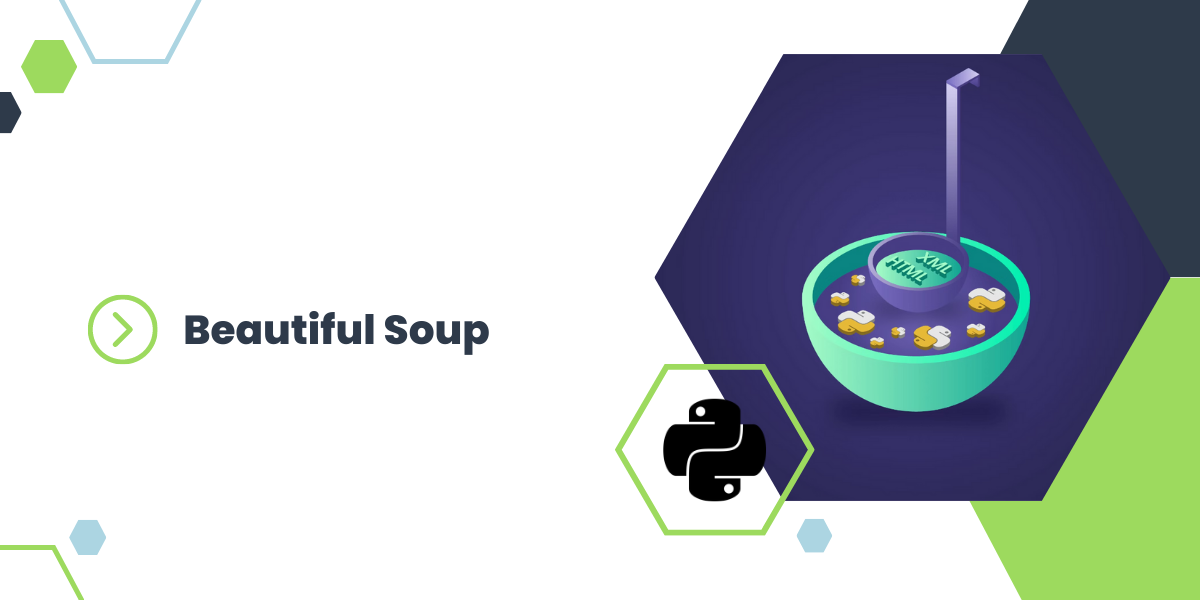
1. Beautiful Soup
Beautiful Soup is a powerful parsing library that extracts data from HTML and XML documents. It provides a simple and intuitive API, making navigating and searching through web page structures easy.
Features
- A powerful parsing library
- Extracts data from HTML and XML documents.
- Simple and intuitive API
- Helps in navigating and searching web page structures
2. Scrapy
Scrapy is a high-level web scraping framework enabling developers to build scalable and efficient projects. It provides powerful features such as automatic request scheduling, built-in support for handling cookies and sessions, and robust error handling.
Features
- A high-level web scraping framework
- Enables developers to build scalable and efficient projects
- Automatic request scheduling
- Provides built-in support for handling cookies and sessions
- Robust error handling capabilities
3. Selenium
Selenium is a powerful automation tool that can interact with web browsers programmatically. Selenium Python Web Scraping enables the scraping of dynamically generated content, such as websites built with JavaScript frameworks.
Features
- A powerful automation tool
- Interact with web browsers programmatically
- Enables scraping of dynamically generated content
- Capable of handling websites built with JavaScript frameworks
4. Requests-HTML
Requests-HTML is a library built on top of the popular Requests library, providing an easy-to-use interface for web scraping. It supports parsing HTML and CSS, making extracting data from web pages simple.
Features
- A library built on top of Requests
- Provides an easy-to-use interface for web scraping
- Supports parsing HTML and CSS
- Simplifies the process of extracting data from web pages
5. PyQuery
PyQuery is a jQuery-inspired framework that offers a syntax similar to jQuery for processing and modifying HTML texts. For developers accustomed to working with jQuery, it provides a familiar syntax and streamlines the process of retrieving data using CSS selectors.
6. LXML
LXML is a powerful library for processing XML and HTML documents. It provides a fast and efficient way to parse and manipulate structured data. Its support for XPath and CSS selectors offers flexible data extraction options.

| Library | Category | Popular Companies | Level of Complexity | Performance |
|---|---|---|---|---|
| Beautiful Soup | Parsing and Navigation | DataCamp, Stack Overflow, Airbnb | Beginner-friendly | Good performance for small to medium-sized websites |
| Eaze | High-level Framework | Scrapinghub, Airbnb, TripAdvisor | Moderate to advanced | Excellent performance for large-scale scraping projects |
| Selenium | Browser Automation | LinkedIn, Amazon, eBay | Moderate to advanced | Excellent for dynamic content and JavaScript rendering |
| Requests-HTML | User-Friendly Interface | Reddit, BuzzFeed, Netflix | Beginner-friendly | Good performance for most web scraping tasks |
| LXML | Efficient XML and HTML Parsing | Google, Facebook, YouTube | Advanced | Excellent performance for parsing large XML documents |
Web Scraping Prevention In Python: Best Practices
Web scraping has become a prevalent technique for extracting data from websites. Scraping the web with Python can offer various legitimate use cases; it can also be misused for unauthorized data harvesting, intellectual property theft, and malicious activities. Following these guidelines can protect your website and maintain control over your valuable information.
1. Robots.txt File
Use Case
The robots.txt file allows website owners to communicate with web crawlers and specify which pages to allow or disallow for scraping. Related: cross-platform app development.
Best Practice
Create and maintain a robots.txt file to provide instructions to well-behaved web crawlers. Use the Disallow directive to restrict access to sensitive or private areas of your website.
Example
Check out the Google Search Console Robots.txt Tester to validate and test your robots.txt file.
2. Rate Limiting and Throttling
Use Case
Implementing rate limiting and throttling mechanisms helps control the number of requests a user or IP address can make within a given timeframe.
Best Practice
Set limits on the number of requests per minute or hour from a single IP address or user agent. This can help prevent abusive scraping and minimize the impact on server performance.
Example
Consider using Python libraries like Flask-Limiter or Django Ratelimit to implement rate limiting in your web application quickly.
3. CAPTCHA Challenges
Use Case
CAPTCHA challenges are designed to differentiate between human users and automated bots, making scraping more difficult for malicious actors.
Best Practice
Integrate CAPTCHA challenges in critical areas of your website or on pages where sensitive data is accessed. Requiring users to finish tasks for accessing the content increases security to a higher level.
Example
Consider using services like reCAPTCHA or Captcha to add CAPTCHA challenges to your web pages.
4. User-Agent Filtering
Use Case
User-Agent filtering allows you to block or restrict access based on the user-agent string sent by the client requesting your web pages.
Best Practice
Monitor user agent strings and identify suspicious or bot-like user agents. Block or restrict access to such agents to prevent scraping attempts from known scraping tools.
Example
Explore the UserAgent library in Python to parse and analyze user agent strings effectively.
5. Honeypot Technique
Use Case
The honeypot technique involves placing hidden links or form fields on web pages to trick scrapers into revealing themselves. Related: hire cross-platform developers.
Best Practice
Insert hidden links or form fields invisible to human users but detectable by scraping bots. When these elements are accessed or interacted with, it indicates suspicious scraping activity.
Example
Check out the Honeypot Project for more information on implementing honeypot techniques to identify and block malicious scraping attempts.
Implementing these best practices can significantly enhance your website’s resilience against web scraping attempts. It’s crucial to balance protecting your data and ensuring a positive user experience. Regularly monitor your website’s traffic, analyze access logs, and update your preventive measures as new scraping techniques emerge.
Conclusion
Adhere to ethical guidelines, respect website policies, and use scraping tools responsibly for web scraping. Data privacy and integrity are paramount in the digital landscape. Keep exploring, experimenting, and refining your web scraping skills to unlock valuable insights and stay ahead in the data-driven world.
You can also seek professional help from a top custom app development company. Echoinnovate IT can provide you with accurate web scraping services using the best tools. Get in touch with us to hire Python developers at affordable costs.
FAQs
What Is The Purpose Of A Web Scraping Tool?
You may automatically extract data from websites using a web scraping application. It can help gather information, perform market research, track competitors, monitor prices, and more. With the right tools, you can streamline data extraction and save valuable time and resources.
Which Web Scraping Libraries Are Compatible With Python's Tech Stack?
Python’s tech stack is highly versatile, and many web scraping libraries are compatible. Some popular choices include Beautiful Soup, Scrapy, Selenium, Requests-HTML, PyQuery, and LXML. These libraries integrate well with Python and offer powerful features for web scraping tasks.
Can Python Libraries Or Tools Handle The Scraping Of Dynamic Websites That Require JavaScript Rendering?
Yes, Python libraries and tools like Selenium and Requests-HTML can handle the scraping of dynamic websites that require JavaScript rendering. They can simulate user interactions, execute JavaScript code, and retrieve dynamically generated content. This capability allows you to scrape data from websites that heavily rely on JavaScript for their functionality.
What Are The Advantages Of Using Python Libraries And Web Scraping Tools For Data Extraction?
Using Python libraries and web scraping tools for data extraction offers several advantages. These include
Flexibility: Python provides many libraries and tools, making it flexible for different scraping requirements.
Ease of Use: Many Python libraries have user-friendly APIs and syntax, making them accessible to beginners and experienced developers.
Rich Ecosystem: Python has a vibrant community and extensive documentation, ensuring excellent support and resources for web scraping tasks. Related: custom software development.
Integration: Python seamlessly integrates with other data processing and analysis tools, allowing you to incorporate web scraping into your existing workflows.
Automation: Python libraries and tools enable you to automate repetitive scraping tasks, saving time and effort.
What are the best Python web scraping tools in 2025?
In 2025, the best Python web scraping tools include BeautifulSoup, Scrapy, Selenium, Playwright, Requests, LXML, Requests-HTML, and Pyppeteer. These libraries and frameworks support efficient data extraction, HTML parsing, and dynamic content scraping, making them ideal for SEO, market analytics, and AI projects.
How does Scrapy compare to BeautifulSoup for web scraping?
Scrapy is a full-fledged asynchronous scraping framework built for large-scale crawls and pipeline processing, while BeautifulSoup is simpler and ideal for parsing HTML structure in smaller projects. Scrapy is preferred for enterprise web data scraping in the USA, while BeautifulSoup is great for prototyping and light data extraction.
Can I scrape JavaScript-heavy websites with Python? Which tool is best?
Yes. Tools like Selenium, Playwright, or Requests-HTML (which supports JS rendering) are best suited for web scraping on JavaScript-heavy sites. Playwright is gaining popularity in 2025 for high-speed, multi-browser scraping of dynamic, mobile-responsive pages.
Is web scraping legal in the USA? What should I consider?
Web scraping is legal in many contexts in the USA, but you must comply with terms of service, robots.txt, anti-scraping measures, and data privacy laws (e.g., CCPA, GDPR). Always use ethical scraping, cite sources, and anonymize personal data to maintain trust and E-E-A-T credibility.
Frequently Asked Questions
The most-used Python web scraping libraries in 2026: (1) Beautiful Soup — easiest for parsing HTML/XML, beginner-friendly. (2) Scrapy — full-featured framework for large-scale scraping projects. (3) Requests + lxml — fast combo for simple scraping. (4) Playwright (Python) — for JavaScript-rendered pages, replaces Selenium for most use cases. (5) Selenium — still works for legacy needs. (6) httpx — async-first replacement for requests.
It depends. Scraping publicly available data (no login required) is generally legal in the US per major court rulings (LinkedIn v. hiQ Labs). Scraping copyrighted content, violating terms of service, or scraping behind login walls can have legal consequences. EU GDPR creates additional restrictions on personal data. Always: respect robots.txt, rate-limit politely, don’t scrape behind logins without permission, and consult legal counsel for commercial scraping.
For one-off scripts and small projects: Beautiful Soup + requests. Easy to learn, straightforward syntax, perfect for scraping a few hundred pages. For production scraping, large datasets, or recurring jobs: Scrapy. It handles concurrency, request queuing, retries, pipelines, and middleware out of the box. Most senior scrapers use both — Beautiful Soup for ad-hoc work, Scrapy for serious projects.
For JavaScript-heavy sites that render content client-side: (1) Playwright (Python) — modern, fast, handles all major sites. (2) Selenium — older but still works. (3) Puppeteer-extra (via pyppeteer) — niche use cases. (4) Find the underlying API — many \”JS-heavy\” sites have JSON APIs you can hit directly, much faster than rendering. Always check Network tab first; if API is available, skip browser automation.
Practical anti-blocking tactics: (1) Rate limit (1-3 requests/second per domain). (2) Rotate user agents. (3) Use rotating proxies (Bright Data, Smartproxy, ScraperAPI). (4) Respect robots.txt. (5) Use realistic headers (Accept-Language, Accept-Encoding). (6) Random delays between requests. (7) Solve CAPTCHAs sparingly via 2Captcha or Anti-Captcha if absolutely needed. Aggressive scraping gets sites to invest in better blocking — be polite.
Build an EdTech App
Build a Khan/Coursera-class learning platform — gamification, video pipeline, assessments, real-time tutoring, and analytics.
