Building a scooter-sharing app like Bird or Lime is a substantial investment in 2026, depending on how many cities you launch in, how much IoT and fleet automation you need, and whether you build a lean MVP or a multi-region platform from day one. Cost varies widely because a scooter app is not one app. It is a connected system: a rider mobile app, an admin dashboard, a fleet-operations tool for the crews who charge and rebalance scooters, and an IoT layer that talks to the GPS and lock hardware on every vehicle. This guide breaks down what each piece does, what drives its cost, and where founders quietly overspend. We cover the market opportunity, how these apps work end to end, the multi-component architecture, the tech stack and hardware integration, realistic cost tiers, monetization, the recurring costs most budgets miss, and practical ways to reduce spend without shipping a fragile product. Whether you want a single-city pilot or a platform ready to scale, the goal here is to give you an accurate mental model before you request a quote, so you can plan a build that matches your budget and your launch timeline. If you would rather skip to a scoped estimate, our
mobile app development team can walk you through it.
The market opportunity for scooter-sharing apps in 2026
Micromobility has moved from a novelty to a fixture in urban transport, and the numbers keep climbing. Industry analysts value the global shared micromobility market in the tens of billions of dollars, with e-scooters holding a large share of trips because they suit short first-and-last-mile journeys that cars and public transit serve poorly. Cities that once banned dockless scooters now run permit programs, which gives operators a clearer regulatory path than the chaotic early years. For a business, that maturity cuts two ways. The upside is proven demand and municipal frameworks you can plan around. The challenge is that the easy land grab is over, so a new entrant needs sharper positioning: a specific city, a campus, a resort, a corporate campus shuttle replacement, or a white-label platform sold to other operators. The most durable opportunities in 2026 are not always consumer-facing at all. Fleet operators, property managers, universities, and mobility startups in emerging markets frequently need a custom or white-label app rather than building an engineering team from scratch. If you are evaluating whether to build, start with unit economics per scooter per day, not with app features. A clear view of ride volume, utilization, and operating cost per vehicle tells you how much you can responsibly invest in software. Our
software development company often helps founders pressure-test that model before a line of code is written, so the build serves the business case instead of the other way around.
The market backs a build decision in 2026, though the story is maturity rather than hype. The micromobility platform segment continues to grow year over year, and the broader micro-mobility market is expanding at about 20.7 percent a year. Scooters make up around 42.3 percent of that market in 2026, commercial and shared-fleet use accounts for about 51.4 percent of riders, and pay-per-ride is roughly 58 percent of billing. Longer term, forecasts point to sustained expansion of the platform segment through 2036 at about 10.6 percent annual growth from 2026.
The more useful signal is qualitative: 2026 is widely described as the year micromobility moves from chaotic, venture-fueled experimentation to operational maturity. For anyone commissioning a scooter app, that reframes the priority list. Fleet-operations tooling, predictive maintenance built on IoT telemetry, and honest unit economics now matter more than a pure feature land-grab, and the sections below follow that order.
How scooter-sharing apps actually work, end to end
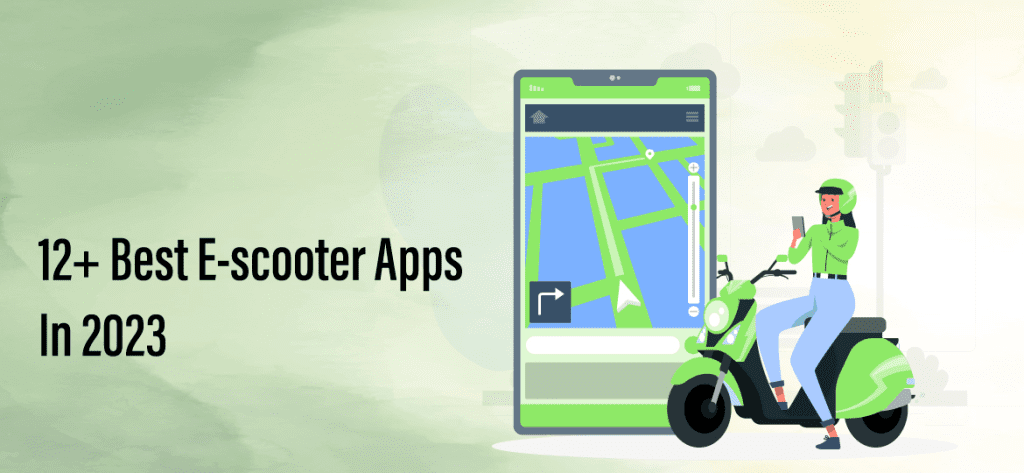
From the rider’s view, a scooter-sharing app feels simple: open the map, find a scooter, scan a code, ride, and pay. Under that simplicity sits a chain of coordinated systems. It starts with location. The app pulls live GPS positions of available scooters, either from the vehicles themselves or from your backend, and renders them on a map with battery levels and pricing. To start a ride, the rider scans a QR code printed on the scooter, or enters its ID. That scan hits your backend, which verifies the scooter is available, checks the rider’s payment method and account status, and sends an unlock command. The unlock travels over a cellular IoT module on the scooter, which controls the physical lock or motor controller. Each scooter carries its own GPS and connectivity hardware, so it reports position, speed, and battery continuously during the trip. Payments run through a tokenized payment processor, usually with a pre-authorization hold at ride start and a final charge at ride end. Geofencing runs throughout: the app and backend enforce no-ride zones, slow zones, and designated parking areas by comparing the scooter’s live coordinates against city-defined polygons, and they can throttle the motor or block ride-end outside approved areas. When the rider ends the trip, the backend calculates fare, captures payment, locks the scooter, and logs the trip for analytics and city reporting. Every one of these steps has to be reliable, because a failed unlock or a stuck ride is a support ticket and a lost customer.
The multi-component architecture behind a scooter platform
A scooter platform is best understood as four connected products that share one backend, and pricing tracks that reality. The first is the rider app, on iOS and Android, where discovery, unlocking, riding, payment, and support live. The second is the admin and operator dashboard, a web application where your team manages fleets, pricing, promo codes, service areas, geofences, users, refunds, and city reporting. The third is the fleet-operations app, a mobile tool for the field crews and independent contractors who collect scooters for charging, redeploy them in the morning, and handle maintenance; it needs task lists, scooter status, navigation to vehicles, and photo-based proof of work. The fourth is the IoT and telematics layer, the software that talks to the hardware on every scooter, ingests a constant stream of GPS and battery data, and issues lock and unlock commands. Underneath all four sits a shared backend: APIs, a real-time messaging layer for device commands, a database for trips and users, a payments integration, a mapping and geofencing service, and an analytics pipeline. Treating these as one monolithic app is a common and expensive mistake, because the rider app and the fleet app have different users, different release cycles, and different reliability needs. A well-scoped build separates them while keeping the backend unified. If you want a deeper primer on how these moving parts translate into effort and budget, our
mobile app development cost guide covers the estimation logic in detail.
Must-have features by panel: rider, admin, fleet-ops, and IoT
Scoping features by the panel they belong to keeps a project honest and prevents the rider app from swallowing work that really lives in operations. The rider app carries everything the customer touches. The admin dashboard is where your business runs. The fleet-operations app keeps vehicles charged and deployed. The IoT layer is the plumbing that makes physical scooters respond to digital commands. The table below lists the core feature set most operators need at launch, grouped by panel, so you can see the full surface area before you decide what to cut for an MVP. Use it as a checklist when you brief a development team, and mark each item as launch-critical, phase-two, or optional. Being explicit here is the single biggest lever on both cost and timeline, because vague requirements are what turn a lean MVP into a sprawling, over-budget project mid-build. A useful rule of thumb is that anything a rider sees belongs in the rider app, anything your business configures belongs in the admin dashboard, anything a field crew does in the street belongs in the fleet-ops app, and anything that talks to physical hardware belongs in the IoT layer. When a feature spans two panels, split it deliberately rather than duplicating logic, and keep the shared rules, pricing, geofences, and vehicle state, in the backend so all four surfaces read from one source of truth.
| Rider app | Admin dashboard | Fleet-ops app | IoT layer |
|---|
| Live scooter map with battery and pricing | Fleet and vehicle management | Task list for pickup and rebalancing | Real-time GPS and battery ingestion |
| QR scan to unlock | Dynamic pricing and promo codes | Navigation to each scooter | Remote lock and unlock commands |
| In-ride tracking and pause | Geofence and service-area editor | Battery swap and charging logs | Speed throttling by zone |
| Wallet, cards, and ride history | User management and refunds | Photo proof of parking | Firmware and diagnostics reporting |
| Ratings, support, and safety tutorial | Analytics and city reporting | Maintenance ticket handling | Low-battery and theft alerts |
Map that surface against your first market, and the MVP scope tends to define itself.
Multi-modal fleets: one app for scooters, bikes, and mopeds
A pattern showing up in more 2026 RFPs is the multi-modal fleet: bikes, scooters, and mopeds managed inside a single rider app and a single operations backend rather than three separate products. For riders it is one wallet, one map, and one account across vehicle types; for operators it is shared geofencing, pricing, and maintenance workflows, which lowers the cost per vehicle of running the platform. If a multi-modal roadmap is even a possibility, design the data model for it from the start, because retrofitting a second vehicle type into a scooter-only schema is expensive.
Two capabilities carry most of the weight here. Predictive maintenance that reads IoT telemetry to flag a failing battery or brake before it strands a vehicle leans on AI development work, and scaling a fleet-operations team to keep pace with more vehicles per city often means adding engineers quickly through IT staff augmentation rather than pausing the roadmap to hire.
Tech stack and hardware/IoT integration
The technology choices for a scooter platform balance development speed, real-time performance, and the reality that you are controlling physical hardware in the field. For the rider and fleet-ops mobile apps, a cross-platform framework is usually the pragmatic choice, because it lets one team ship both iOS and Android from a shared codebase and cuts build cost meaningfully. Our
React Native app development practice is a common fit here, and if you are weighing frameworks, our
React Native vs Flutter comparison lays out the trade-offs for real-time, map-heavy apps. The backend typically runs on a scalable server stack with a real-time messaging layer, such as MQTT, to exchange commands and telemetry with thousands of devices without hammering your APIs. Mapping and geofencing lean on a provider like Google Maps or Mapbox for tiles, routing, and polygon checks. Payments run through a tokenized processor so card data never touches your servers. The part that separates a scooter app from an ordinary on-demand app is hardware integration. Each scooter carries an IoT control unit with a cellular modem, GPS, and an interface to the lock and motor controller. Your software has to speak the protocol that unit exposes, handle intermittent connectivity gracefully, queue commands for devices that are briefly offline, and reconcile state when a scooter reconnects. Firmware behavior varies by hardware vendor, so early alignment on the IoT unit you will deploy is essential; changing hardware late in a build forces backend rework. Getting the device protocol, connectivity handling, and command reliability right is where experienced engineering earns its cost.
What it costs to build: MVP, growth, and scale tiers
Cost on a scooter platform is driven less by the rider app’s polish and more by how much of the operator, fleet, and IoT machinery you build up front, and how many markets you plan to support. To make budgeting concrete, it helps to think in three tiers. An MVP proves the core loop in one city with essential features and a single hardware vendor. A growth build adds the operations tooling, dynamic pricing, and analytics that let you run a real business across a few cities. A scale build hardens the platform for many markets, higher fleet volume, deeper automation, and, often, white-label or multi-operator capability. The table below gives realistic 2026 market ranges for each tier. These are industry ranges for planning, not a quote for your specific project; the honest number depends on your feature list, hardware, city count, and timeline. We share a transparent quote only after a short scoping call, because a figure pulled before we understand your fleet and markets would be a guess.
| Tier | What it includes | Investment level | Rough timeline |
|---|
| MVP (1 city) | Rider app, basic admin, QR unlock, one IoT vendor, payments, geofencing | Entry-level | 3 – 5 months |
| Growth (few cities) | Fleet-ops app, dynamic pricing, analytics, promos, expanded admin | Mid-range | 5 – 8 months |
| Scale (multi-region) | High fleet volume, automation, multi-operator or white-label, hardened infra | Enterprise-scale | 8 – 14 months |
One more variable moves these numbers more than any single feature: the number of cities and the fleet size you plan to support at launch, because each new market adds regulatory reporting, connectivity, and operations load. Most funded startups begin at the MVP tier in a single city and expand tier by tier as utilization data justifies the next investment, which keeps early spend disciplined and tied to demand you can actually see in the ride numbers.
How scooter apps make money: monetization models
The revenue model shapes both your feature set and your software priorities, so it belongs in the plan from the start rather than bolted on later. The core model for most operators is per-ride pricing: an unlock fee plus a per-minute rate. This is simple for riders and predictable to build, but it demands accurate trip timing, reliable payment capture, and clean handling of edge cases like paused rides or failed unlocks where you must not overcharge. Layered on top, subscriptions and ride passes give frequent riders a flat monthly or daily rate, which smooths revenue and increases retention; these require a billing engine that handles recurring charges and entitlement checks at ride start. Dynamic pricing raises rates during peak demand or in high-cost zones, which lifts revenue and helps with rebalancing incentives, but it needs a pricing engine your operators can configure and audit. Corporate and campus partnerships sell bulk access to universities or employers, billed to an organization rather than individuals, which means group accounts and consolidated invoicing. Advertising and partner promotions can add a secondary stream through in-app placements or discounts tied to local businesses. For a growing number of businesses in this space, the model is not consumer revenue at all but a white-label licensing fee, where you build the platform once and license it to other operators, property managers, or cities. Whatever mix you choose, the payment, billing, and pricing components should be scoped to it explicitly, because retrofitting a subscription engine into a per-ride-only backend is far more expensive than planning for both.
Hidden and ongoing costs most budgets miss
The build price is only the first line of a scooter platform’s budget, and the recurring costs surprise founders who plan for development alone. Mapping and geolocation services bill by usage; a busy app making constant map, routing, and geocoding calls can run into meaningful monthly fees as ride volume grows, so architecting to minimize redundant calls matters. SMS and notifications for verification codes, ride receipts, and alerts carry per-message costs that scale with your user base. IoT connectivity is a real line item: every scooter needs a cellular data plan for its modem, and while each SIM is inexpensive, a fleet of a few thousand vehicles turns that into a monthly operating cost you must model per scooter. Cloud hosting and the real-time messaging layer scale with fleet size and trip volume. Payment processing takes a percentage of every transaction. Beyond services, software maintenance is ongoing and non-optional: operating-system updates, hardware firmware changes, security patches, city compliance reporting, and bug fixes all require an engineering budget after launch, typically a meaningful percentage of the original build cost per year. There are also app store fees, insurance and legal compliance per city, and customer support tooling. The practical takeaway is to budget for the platform as a living operation, not a one-time purchase. When we scope a project, we lay out the expected recurring costs alongside the build estimate, because a client who launches without planning for connectivity and maintenance is a client who runs into trouble in month four. Our
engineering team can help you model these before you commit.
How to reduce cost, and how EchoInnovate IT builds mobility apps
The reliable ways to control cost on a scooter platform are structural, not cosmetic. First, build an MVP before a platform. Launch one city with the core ride loop and a single hardware vendor, gather utilization data, and let real demand justify the next feature. Our
MVP for startups approach is designed to get a defensible product live at the low end of the cost range so you can validate before scaling. Second, use cross-platform development so one codebase serves iOS and Android instead of funding two native teams. Third, work with an offshore or nearshore engineering partner, which can lower blended rates substantially without lowering quality when the team is experienced; our
offshore development center model gives you a dedicated team at a predictable monthly cost, and our
hire offshore developers guide explains how to do it without the usual pitfalls. Fourth, commit to one IoT hardware vendor early to avoid backend rework. EchoInnovate IT is an India-based custom and white-label software firm with 12 years in business, 50-plus employees, and more than 500 products shipped, many of them launched under our clients’ own brands. We hold a 5.0 rating on Clutch across six verified reviews. For on-demand mobility, we build the full stack, rider app, operator dashboard, fleet-ops tool, and IoT integration, as a connected system through our
mobile app development practice, and we scope transparently so you know what you are paying for at each phase.
Start with a 2-week pilot sprint
Start with a $1,500 fixed-price, two-week pilot sprint. In it, we scope your scooter platform, map the rider, admin, fleet-ops, and IoT components against your first city, recommend a hardware and tech-stack path, and hand you a clear build plan with a transparent quote for each phase. It is a low-risk way to see how we work before committing to a full build. With 12 years in business, 50-plus employees, 500-plus products shipped mostly under our clients’ own brands, and a 5.0 rating on Clutch across six verified reviews, EchoInnovate IT builds on-demand mobility platforms as connected systems, not one-off apps. Book your pilot sprint through our
mobile app development team and get a scoped estimate for your scooter-sharing app.
Frequently Asked Questions
Written by Kush P, Chief Technology Officer at EchoInnovate IT. Kush has led custom software and dedicated-team builds for 12 years, with 500+ products shipped — most of them under clients’ own brands.