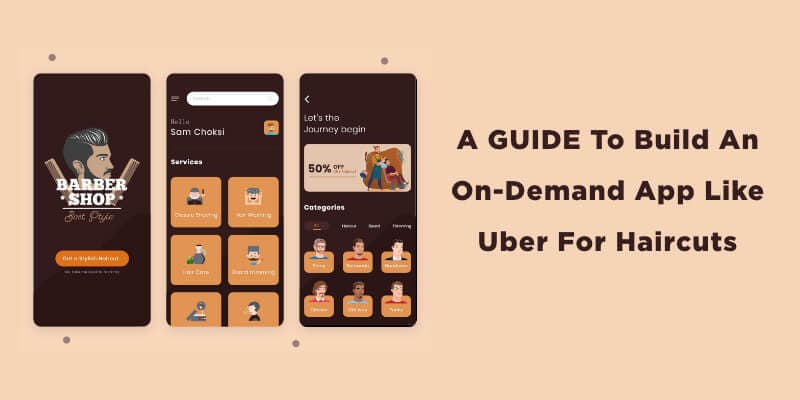
Building an on-demand app like Uber for haircuts — where customers book a stylist to their home or a nearby chair on demand — typically costs between $40,000 and $150,000+ in 2026, depending on features, real-time complexity, and how many integrations you need. A focused MVP with booking, stylist matching, live tracking, and in-app payments usually lands in the lower-to-mid five figures, while a full multi-city marketplace with scheduling, promotions, and analytics runs into six figures. Timeline follows the same curve: roughly 4 to 6 months for an MVP and 7 to 12 months for a full platform.
This guide is written for the founder or operator planning an on-demand beauty or home-services business, not only the engineer building it. You will get a clear cost breakdown, the three-app architecture these platforms need, the must-have features and integrations, an honest view of what drives the price, and how a dedicated partner like EchoInnovate IT plans, builds, and maintains on-demand apps. For an adjacent build, our salon app development guide pairs well with this article.
- An Uber-for-haircuts style app usually costs $40,000–$150,000+ and takes 4 to 12 months, driven by real-time features and scope.
- It is really three apps: a customer app, a stylist (provider) app, and an admin panel — plus a backend that matches supply and demand.
- Real-time matching, live location tracking, scheduling, and in-app payments with a commission split are the defining features.
- Launch an MVP in one city or service area first, prove the unit economics, then expand.
- We do not publish fixed prices because scope decides everything; we give a transparent quote after a short scoping call.
How much does an Uber-for-haircuts app cost?
Cost depends on scope, so the useful way to budget is by platform maturity. The ranges below reflect 2026 market rates for custom on-demand app development across agencies and dedicated offshore teams. They assume a professionally designed, tested, store-published set of apps — customer, provider, and admin — not a single template. Use them to size your thinking, then confirm the real figure with a scoping call, because real-time features and multi-city support move on-demand projects between tiers quickly.
| On-demand platform | Typical 2026 range | Typical timeline |
|---|---|---|
| MVP (booking, matching, tracking, payments) | $40,000–$70,000 | 4–6 months |
| Mid-level (scheduling, ratings, promotions) | $70,000–$110,000 | 6–9 months |
| Multi-city marketplace (analytics, surge) | $100,000–$140,000 | 8–11 months |
| Enterprise (multi-service, AI dispatch) | $130,000–$150,000+ | 10–12 months+ |
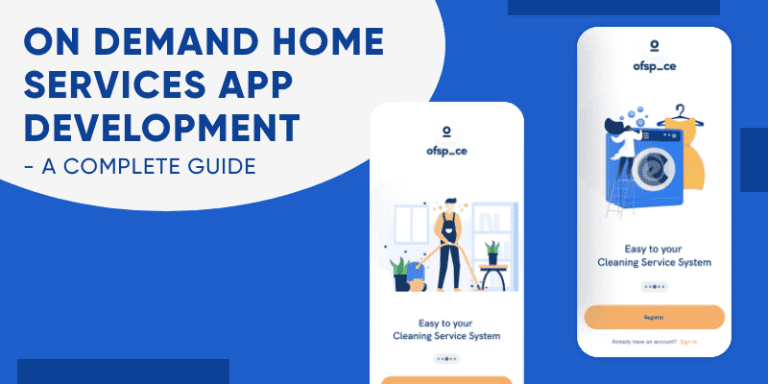
Two things move you between tiers. The first is real-time complexity — live matching, location tracking, and instant notifications require more careful architecture than a simple booking form. The second is the number of apps and platforms: a customer app, a provider app, and an admin panel across both Android and iOS is a large surface area. We do not publish a fixed price for your project because these variables are specific to you; we provide a transparent quote after a short scoping call. For adjacent numbers, see our mobile app development cost guide and our on-demand home services app guide.
How an on-demand app works: three apps
An Uber-for-haircuts platform is not one app but three connected products sharing a single backend. Understanding this structure is the key to budgeting the project accurately, because each piece carries its own build cost.
The customer app. Where users discover stylists, choose a service, book on demand or for a scheduled time, track the provider’s arrival, pay, and rate the experience. This is the app most people picture, but it is only a third of the work.
The provider (stylist) app. Where stylists set availability, accept or decline requests, navigate to the customer, mark jobs complete, and see their earnings. Provider experience is often the difference between a marketplace that fills with supply and one that stalls, so it deserves as much care as the customer side.
The admin panel. A web dashboard where you manage providers and customers, set commission rates and pricing, run promotions, resolve disputes, and monitor the marketplace with analytics. This is your control room and the tool your operations team lives in.
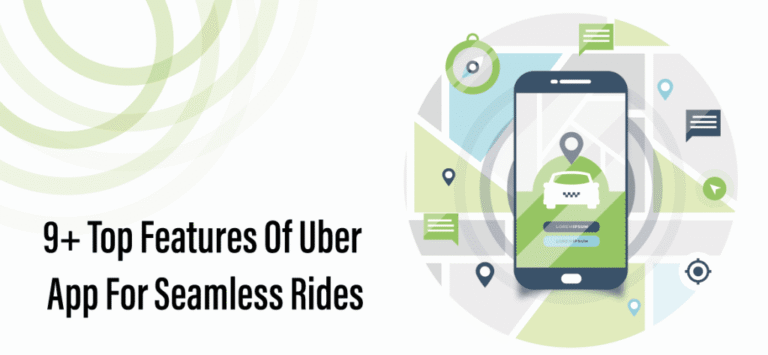
The backend that connects them. Behind all three sits the engine that matches demand to supply in real time, handles payments and the commission split, sends push notifications, and keeps location and status in sync. This real-time matching and dispatch logic is the technical heart of any on-demand app and a major share of the cost. Our breakdown of the most useful features of the Uber app shows how these pieces fit together in practice.
Must-have features
These features define an on-demand beauty or home-services app. Budgeting for them upfront avoids surprise costs, and cutting the wrong one undermines the whole model.
Real-time matching and dispatch. When a customer books, the system finds available, nearby, qualified stylists and offers the job. Getting this fast and fair is central to the experience for both sides.
Live location and tracking. Customers see the provider approaching; providers get navigation to the address. This requires reliable maps and location integration.
Scheduling and on-demand booking. Support both instant bookings and appointments booked for later, with calendars, reminders, and easy rescheduling — beauty services skew more toward scheduled than pure on-demand.
In-app payments and commission split. Secure payment at booking or completion, automatic splitting of each transaction between the provider and your platform commission, tips, and payouts to providers. This is the core of your revenue model.
Ratings, reviews, and profiles. Two-way ratings build trust and quality. Rich stylist profiles with photos, services, and prices help customers choose.
Notifications and in-app chat. Push notifications for requests, confirmations, and arrivals, plus messaging between customer and provider for details like gate codes or style preferences.
Promotions, referrals, and analytics. Discounts and referral mechanics to grow both sides of the marketplace, and analytics in the admin panel to watch supply, demand, and unit economics. For a wider view of the category, see our on-demand car wash app guide, which shares the same mechanics.
Tech stack and integrations
An on-demand app runs on a mainstream stack, with extra attention on the real-time layer. A typical setup looks like this:
- Mobile apps: Flutter or React Native for the customer and provider apps across Android and iOS from one codebase, which meaningfully lowers cost when you need four app builds in total. Native Kotlin and Swift are options where performance demands it.
- Real-time backend: Node.js is a common choice for the matching, dispatch, and live-update engine, often with WebSockets or a real-time service for location and status updates.
- Admin panel: A web dashboard built in React or Vue, sharing the same API and database as the apps.
- Database and hosting: PostgreSQL or MySQL, plus a fast store for live location data, on a cloud platform such as AWS or Google Cloud with monitoring and autoscaling for demand spikes.
Integrations carry much of the functionality. The essential ones are maps and navigation (Google Maps or Mapbox for matching, routing, and tracking), a payment provider that supports marketplace payouts and commission splits (such as Stripe Connect), push notifications, and SMS for confirmations. Many teams also integrate identity verification for providers. Our note on Uber API integration covers how these ride-hailing patterns are wired. If you also plan a companion service later, a well-designed API keeps that cheap. When your team lacks a specific real-time or payments skill, IT staff augmentation can add it without a permanent hire.
Steps to build the app
Building an on-demand marketplace follows a predictable path, with the real-time backend as the foundation everything else depends on.
1. Validate the model and pick one market. Confirm there is real demand and enough provider supply in one city or area, and decide your commission and pricing model. On-demand businesses live or die on unit economics, so scope the MVP to prove them.
2. Scope the three apps. Turn the model into a prioritized feature list for the customer app, provider app, and admin panel, split into launch and later. A short discovery phase with user flows and wireframes removes the biggest source of overspend.
3. Design all three experiences together. Design the customer, provider, and admin interfaces around a shared data model so they stay consistent and efficient to build.
4. Build the real-time backend. Matching, dispatch, location tracking, payments with commission split, and notifications come first, because both apps depend on them.
5. Build the customer and provider apps. Engineers build both apps against the live backend, integrating maps, payments, and messaging, and testing the full booking-to-completion flow across devices.
6. Build the admin panel. The operations dashboard for managing the marketplace, pricing, promotions, and disputes, with analytics to monitor supply and demand.
7. Test the whole marketplace, then launch. Test matching under load, payment edge cases, and location accuracy, then launch in your chosen market with both sides seeded so early customers find available providers.
8. Measure, tune, and expand. Watch fulfillment rates, wait times, and provider earnings; tune matching and pricing; then expand to new areas once the model works. Our salon app development guide covers the beauty-specific details.
What drives the cost up or down
If two quotes for an Uber-for-haircuts app come back far apart, the factors below almost always explain the gap. Knowing them lets you steer the budget deliberately.
Real-time complexity. Live matching, location tracking, and instant dispatch are harder to build and test than a simple booking form. The more real-time your experience, the higher the cost — and it is usually worth it, because it is the product.
Number of apps and platforms. Customer and provider apps across Android and iOS, plus a web admin panel, is a large surface area. Cross-platform frameworks reduce this from four native builds to two shared codebases.
Payment and payout complexity. Marketplace payments with automatic commission splits, tips, and provider payouts are more involved than a simple charge. Multi-currency or multi-country support adds more.
Scheduling depth. Pure on-demand is simpler than rich scheduling with recurring appointments, provider calendars, and cancellation policies — and beauty services usually need the richer version.
Geographic scope. A single-city MVP is far cheaper than a multi-city platform with zone-based pricing, surge, and regional operations.
Team model. Onshore agencies typically cost more per hour than a dedicated offshore team for comparable quality. Many founders use an offshore software development company to get the same output at a lower total cost. The goal is the lowest cost per shipped, working feature — not the cheapest hourly rate.
How EchoInnovate IT builds on-demand apps
EchoInnovate IT is an India-based custom and white-label software development company with 12 years of experience, 50+ employees, and more than 500 products shipped — including on-demand and marketplace apps, most of them under our clients’ own brands. We build on-demand platforms around the metric that decides their survival: fulfillment. Can a customer reliably get matched with an available provider quickly? Everything in the architecture serves that.
A typical engagement starts with a discovery phase that produces a prioritized feature list for all three apps, wireframes, an integration map (maps, payments, notifications), and a technical plan for the real-time backend. From there a dedicated team — designers, mobile and back-end engineers, and QA — builds in short cycles, so you see working software every couple of weeks. We handle the matching engine, the customer and provider apps, the admin panel, integrations, load and payment testing, store release, and ongoing maintenance, working in your time zone and toolset.
Because we work white-label, you can put your own brand on the platform and present it as your in-house product. Our mobile app development team has delivered ride, delivery, home-services, and beauty on-demand apps, and we hold a 5.0 rating across 6 verified Clutch reviews. When you need to scale a specific skill for a phase — a real-time engineer or a payments specialist, say — we can extend your team through staff augmentation rather than forcing a full-team engagement. What you should expect: a working on-demand platform on a mainstream stack, built to fulfill bookings reliably, delivered on a transparent quote, with a partner still there as you expand to new markets.