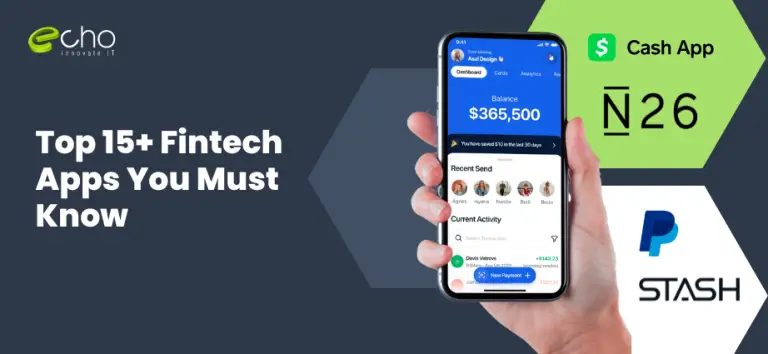
Why Fintech Apps Dominate Mobile in 2026
Fintech is now the second-largest mobile app category by revenue (after gaming), and the most-downloaded category in many countries. By 2026, over 2.6 billion people globally use a fintech app for banking, payments, investing, or budgeting — and that number grew 40% in the last 3 years. The drivers are clear: traditional banks lost trust during the 2023 banking crisis; fintech apps offered better UX, lower fees, and faster account opening.
If you’re tracking fintech apps in 2026 — whether as a user, investor, or builder — the category has segmented into clearer subcategories: neobanks (Chime, Revolut, N26), investing (Robinhood, Webull, eToro), budgeting (Mint successor apps after Mint shutdown, YNAB, Monarch), cash advance (Dave, Earnin), crypto (Coinbase, Kraken, Binance), and cross-border payments (Wise, Remitly).
This guide covers the most popular fintech apps in 2026 — broken down by category, with focus on what each does best, fee structures, and regulatory considerations. If you’re building a fintech product, see our finance app development services for the compliance and security realities.
Rvolut
8 min read · Last updated: May 2026
Revolut is a global neobank, which means it operates solely online and has no physical branches. It was founded in London in 2015 and has since grown to be a key player in the fintech industry, with over 26 million customers in 35 countries.
Features
- Global: Use a single account to access banking services across multiple nations.
- There are no hidden fees: Pricing is transparent, with no surprises.
- Competitive exchange rates: When exchanging currencies, get the best rates available.
- Fast and secure: Transactions are completed instantly, and your money is secured by strong security safeguards.
- Beginner-friendly: The Revolut app is simple to use and navigate, even for beginners.
Coinbase
Coinbase is a cryptocurrency exchange where users may buy, trade, and manage digital assets. It’s a reputable and safe website for purchasing, selling, and managing various cryptocurrencies. It provides buy and sell offers for over 100 cryptocurrencies with flat currency support, secure storage, a user-friendly interface, and other advanced features. This makes it another great option in our “top Fintech Apps” in our list. Related: fintech app development services.
Features
- Flat currency support: Use your bank account or debit card to quickly buy cryptocurrency in USD, EUR, and other supported currencies.
- Secure storage: Coinbase provides industry-standard security methods to secure your cryptocurrency holdings, including as cold storage and insurance.
- User-friendly interface: The platform is intended to be user-friendly, making it accessible even to beginners.
- Advanced capabilities: It has advanced capabilities for experienced traders, including charting tools, margin trading, and staking possibilities.
- Coinbase’s mobile app: the app makes it easy to manage your cryptocurrency while on the road.
N26

The N26 app is the mobile banking app for N26, a digital bank with operations in various European countries and the United States. The software enables users to manage their bank accounts, transfer and receive money, make payments, and keep track of their spending.
The N26 app is available for free on iOS and Android. There are also premium versions of the app with extra features like travel insurance and metal debit cards.
Overall, the N26 app provides a convenient and user-friendly approach to monitoring your funds. However, before making an account, ensure that the app is available in your country and that you match the eligibility conditions. Ensure that you meet the eligibility conditions before opening an account. Related: mobile app development services.
Features
- 100% Mobile: The N26 app makes it simple to manage all of your accounts.
- No monthly fees: Most N26 accounts have no monthly fees, which keeps your banking costs low.
- Transparent pricing: There are no hidden fees or levies, which makes budgeting easy.
- Security: N26 uses modern security measures to protect your money, such as fingerprint and facial recognition login.
AXOS Bank
Axos Bank enables consumers and businesses to effortlessly manage their finances. We help our customers plan, bank, borrow, and invest in a convenient and personalized way by combining human insight and computer knowledge.
Axos pioneered the banking model over 20 years ago. On July 4, 2000, we launched as a digital bank, signaling our independence from traditional banking. Since then, we’ve grown our assets to more than $20.3 billion. We’ve emancipated our consumers from the confines of traditional banking by providing competitive interest rates, low to no fees, and simple access, allowing them to focus on what’s essential in life.
Features
- Leading rates: industry-leading rates provide more money to achieve your goals faster.
- Lower fees: from domestic ATM charge reimbursements to bank accounts with no monthly maintenance costs, their lower rates help you to get more out of your money faster.
- Excellent customer service: experience customer service that is dedicated to your happiness. They provide effective and personalized service.
- Security and Ease of Mind: your money is safe with Axos Bank. They are an FDIC-insured bank that has demonstrated financial strength and innovation.
Paypal
It’s one of the prominent fintech apps and online payment networks used by millions of individuals all over the world. It is a global online payment platform that enables you to transfer and receive money, shop at millions of online retailers, and manage your accounts. Also serves as an alternative to typical payment methods such as checks and money orders. It provides services to both individuals and corporations. Related: hire cross-platform developers.
Features
- Sending and getting money: You can send and receive money from friends, family, and corporations worldwide.
- Online Shopping: PayPal checkout allows you to pay for your purchases at millions of online shops.
Bill payment: Pay bills immediately from your PayPal account. - Financial management: Tools such as PayPal Money Management can help you track your spending, make budgets, and manage your funds.
- Security: Provides consumer and seller protection during online transactions.
Venmo

Venmo is another popular mobile payment service, comparable to PayPal but with a stronger emphasis on social features and peer-to-peer transactions. It is a mobile payment service owned by PayPal that is mostly used to send and receive money among friends and acquaintances. Known for its social features, which let users add comments and emoticons to transactions, making it feel more like catching up than simply transferring money. The software is free for Android and iOS devices.
Features
- Send and receive money: One can immediately send and receive money between Venmo users in the United States.
- Split expenses: Easily split bills with pals, ideal for group activities or purchases.
- Social feed: Venmo action is shown in a social stream, just as on other social networking networks.
- Pay retailers: Select online and in-store merchants accept Venmo payments.
- Digital gift cards: Send digital gift cards to friends and family directly using Venmo.
Cash App
Block, Inc. (previously Square, Inc.) developed the Cash App, a popular mobile payment application known to be a well-known fintech app. It enables users to send and receive money, invest in stocks and Bitcoin, and obtain a complimentary debit card with special savings. Related: custom software development.
Features
- Send and receive money: Cash App users may send and receive money instantaneously and for free. You can also send money to people who don’t use the Cash App for a cost.
- Investing: The program allows you to buy fractional shares of equities and Bitcoin. Cash App also offers instructional resources and tools to help newcomers learn how to invest.
- Cash Card: enjoy a free, personalized debit card that allows you to spend your Cash App balance, make ATM withdrawals, and enjoy instant discounts at participating retailers.
- Free Tax Filing: Cash App provides free tax filing services for federal and state filings.
YNAB
YNAB (You Need A Budget) is a personal budgeting tool that aims to assist users gain control of their finances. It employs the envelope budgeting system, which allocates exact amounts of money to certain expenditure categories, allowing users to stay within their budget and avoid overpaying.
Features
- Envelope budgeting: As previously stated, YNAB employs the envelope budgeting system, which allows users to assign exact amounts of money to various spending categories such as groceries, rent, and entertainment. This helps customers keep track of their expenditures and avoid overpaying in any one category.
- Goal setting: Users can set financial goals such as saving for a down payment on a property or repaying debt. YNAB records users’ progress toward these goals, keeping them motivated and on track.
- Bill-tracking: Users can keep track of upcoming bills and schedule reminders to pay them on time. This allows customers to avoid late penalties and have a good credit score.
Stash
Stash Invest is a mobile investment software that combines the functionality of a brokerage account, a robo-advisor, and an online banking account. It is intended to be user-friendly and inexpensive, making it an excellent choice for those who are just beginning to learn about investing.
Features
- Fractional share investing: this allows you to invest as little as $1 in equities and ETFs. This helps you to diversify your portfolio without having to invest a lot of money upfront.
- Stash Smart Portfolios: Select pre-built portfolios based on your risk tolerance and investing objectives. These portfolios are automatically rebalanced, so you won’t have to do it yourself.
- Banking account: Open a checking account with no monthly fees or minimum balances. You may also use your Stash debit card to round up your purchases to the nearest dollar and invest the change.
- Educational resources: Stash’s articles, videos, and quizzes provide educational tools for investing.
Affirm
It is a financial technology startup that provides “buy now, pay later” (BNPL) services. This means you can make purchases at participating merchants and pay in monthly installments. Related: AI-powered app development.
Features
- Financing online and in-store purchases: Affirm works with a variety of online and in-store retailers to allow you to finance items at checkout.
- Flexible payment terms: Choose from a variety of payment plans based on the purchase amount and your creditworthiness. Payment lengths normally range from three to twenty-four months.
- Pre-qualification: Check your eligibility for a pre-approved spending limit without impacting your credit score.
- Affirm Mobile Application: The Affirm mobile app allows you to manage your account, make payments, and track your spending.
Develop A Fintech App With Echoinnovate IT!
Planning to develop your own Fintech App? Contact Echoinnovate IT to get the best Fintech App Solutions from a team of innovative and creative minds. Get your finance business on the wings with one of the leading companies of the USA. We provide the best financial application development services for iOS, Android, and web platforms for your finance app ideas.
Contact Us today.
Conclusion
The most successful fintech app for you depends on the specific financial need:
- For everyday banking: Chime (US), Revolut (Europe + UK), and N26 (Europe) have the largest neobank user bases — fee-free checking, instant card spend notifications, and strong mobile UX.
- For investing: Robinhood still leads on US retail brokerage; eToro for global stocks + copy-trading; Webull for active traders.
- For budgeting (post-Mint): Monarch Money, YNAB, and Copilot Money picked up most of Mint’s former users after it shut down in 2024.
- For cross-border money transfers: Wise (formerly TransferWise) has the lowest fees and most-transparent pricing for international transfers.
- For crypto: Coinbase remains the most-trusted US exchange; Kraken for security-focused users; Binance for non-US trading volume.
Building your own fintech app? EchoInnovate IT has built banking, lending, investing, and payments platforms with bank integrations (Plaid, MX), KYC/AML compliance, fraud detection, and full regulatory frameworks (PCI DSS, SOC 2, GDPR) for over 17 years through our finance app development and mobile app development services. Fintech is the most regulated app category — get a free compliance roadmap below.
Frequently Asked Questions
What is Fintech?
Fintech, short for financial technology, refers to innovative technologies that enhance and automate financial services, ranging from mobile banking apps to cryptocurrency platforms.
How do Fintech apps benefit users?
Fintech apps provide users with convenient access to financial services, streamline transactions, offer personalized financial management tools, and often have lower fees compared to traditional banking.
What services do Fintech apps offer?
Fintech apps offer a wide range of services, including online banking, digital payments, investment platforms, budgeting tools, insurance, and peer-to-peer lending.
How do Fintech apps use AI and machine learning?
Fintech apps leverage AI and machine learning to analyze financial data, provide personalized recommendations, detect fraudulent activities, and enhance the overall user experience.
What makes a fintech app popular in the USA in 2025?
A fintech app is popular in 2025 if it offers secure mobile payments, intuitive user experience, AI-powered personalized financial insights, fast peer-to-peer transfers, support for both Android apps and iOS apps, and follows rigorous USA regulatory compliance like KYC, AML, and PCI DSS.
Which fintech features are most in demand by USA users in Android and iOS apps?
USA users demand features like real-time transaction alerts, biometric login (Face ID / fingerprint), budgeting tools, investment & crypto support, digital wallet integration, voice search, and multi-currency support.
How do fintech apps ensure security and trust in the USA?
Top fintech apps use end-to-end encryption, two-factor authentication (2FA), fraud detection using AI, secure API integrations, and full compliance with USA data and financial privacy laws (e.g. FTC, SEC, FINRA, CFPB).
Are fintech apps safe to use?
Major fintech apps (Chime, Revolut, Robinhood, Coinbase, Wise) are generally as safe as traditional bank or brokerage apps. They use bank-grade encryption, are FDIC-insured (for banking apps in the US) or SIPC-protected (for brokerages), and require multi-factor authentication. The biggest risks are phishing attacks and account takeover — never click links from emails purporting to be your fintech app, always log in directly through the app or official URL.
Why did Mint (the budgeting app) shut down?
Intuit shut down Mint in March 2024, citing low monetization despite high user base (~25 million users). Mint’s revenue from credit-card affiliate marketing was insufficient to fund continued investment, and Intuit’s own Credit Karma offered overlapping features. The shutdown drove a wave of users to Monarch Money, YNAB, Copilot, and Empower — most of which charge $7–$15/month subscriptions instead of relying on affiliate revenue.
How much does it cost to build a fintech app?
A basic fintech app — say, a budgeting app with bank-account aggregation — starts around $80K–$180K for iOS, Android, and backend. A neobank or lending app with full account opening (KYC), card issuance, ACH/wire transfers, and regulatory compliance runs $400K–$1.5M+. Crypto apps add custody complexity and security audits ($150K–$500K extra). Ongoing compliance and security costs (audits, penetration testing, fraud detection) typically equal 30–50% of development cost annually.
Ship your eWallet before your competitors do.
Card-on-file, P2P transfers, NFC tap-to-pay, KYC/AML, multi-currency, crypto rails — we’ve shipped it all. Whether you’re launching an MVP or replatforming a stored-value wallet, our fintech engineers know the compliance gotchas, the BaaS integrations (Synapse, Unit, Treasury Prime), and the PCI scope tricks that save you months of pain. Get a real engineer on a call in 24 hours — not a sales rep.